
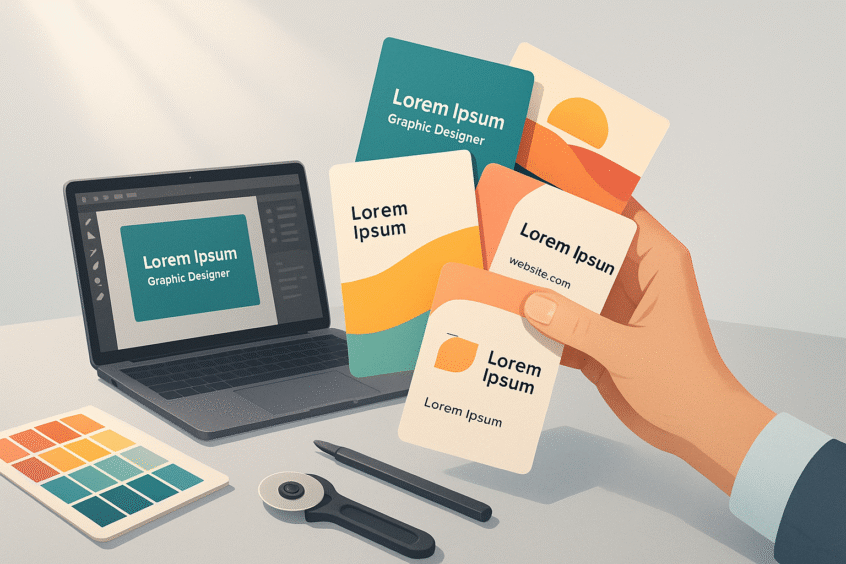
Creating Custom Business Cards That Stand Out
In today’s digital age, you might wonder if business cards still hold any significance. Surprisingly, they do. A well-designed business card is not just a tool for sharing contact information; it’s a powerful marketing tool that can leave a lasting impression. In this guide, we’ll explore how to create custom business cards that truly stand out, reflect your brand, and engage your audience.
Why Business Cards Matter
Despite the rise of digital networking, business cards remain a staple in professional settings. They are tangible, personal, and can convey a lot about your brand at a glance. A unique business card tells potential clients and partners that you pay attention to details and value personal interaction. Moreover, they are an excellent conversation starter, often leading to deeper discussions about your business.

Designing Your Business Card
Creating a standout business card begins with design. The design elements you choose should align with your brand identity and convey the right message. Here are some tips to help you design an unforgettable business card:
Choose the Right Size and Shape
The standard business card size is 3.5 x 2 inches, but there’s no rule that says you have to stick to it. Unique shapes and sizes can make your card more memorable. Consider square cards, rounded corners, or even die-cut shapes that reflect your business, such as a leaf for a gardening service or a book for a publishing company.
Select Eye-Catching Colors
Colors evoke emotions and can significantly impact how your card is perceived. Choose colors that reflect your brand’s personality. If your brand is all about professionalism and trust, consider blues or greens. If it’s more about energy and creativity, opt for reds or yellows. Make sure the text is legible against the background color to ensure readability.
Typography: The Font Matters
The fonts you choose say a lot about your brand. A serif font exudes tradition and reliability, while a sans-serif font feels modern and sleek. Whatever you choose, ensure it’s easy to read. Avoid using more than two different fonts to keep the design cohesive and professional.
Content: What to Include on Your Business Card
While design is crucial, the information on your card is equally important. Here’s what you should consider including:
Your Name and Title
Your name is your brand, so it should be prominent. This helps the recipient remember who you are. Including your title provides context about your role and expertise.
Company Name and Logo
Your company name and logo should be a focal point on the card. This reinforces brand recognition and ensures your card is associated with your business.
Contact Information
Include all relevant contact information, but don’t overload the card. Typically, your phone number, email address, and website URL suffice. If applicable, add your social media handles.
Call to Action or Unique Selling Proposition
Consider adding a call to action or a unique selling proposition. This could be a simple statement about what makes your business special or an invitation to visit your website for more information.
Material and Finish: The Final Touches
The material and finish of your card can elevate its design. Here are some options to consider:
Paper Quality
Invest in high-quality paper. A thicker card feels more substantial and suggests quality. Textured paper can add a unique tactile experience, while smooth paper gives a sleek look.
Finish Options
Consider finishes like matte, gloss, or spot UV. A matte finish provides a modern, understated look, while a glossy finish makes colors pop. Spot UV can highlight specific areas of the card, adding a layer of complexity and interest.
Printing and Distribution
Once you’ve designed your card, it’s time to print and distribute them. Choose a reputable printing service that can deliver quality results. When it comes to distribution, always have a stack of cards on hand. You never know when you’ll meet a potential client or partner.
Conclusion
In the world of business, first impressions are everything. A creative and well-thought-out business card can set you apart from the competition and leave a memorable impression on those you meet. By focusing on design, content, and quality, you can create a business card that not only conveys your information but also reflects your brand’s personality. So, next time you hand out a card, make sure it’s one that captures attention and sparks conversation.
No More BS – Get a FREE Consultation
No more BS. Let’s talk real world $#!+ about what you need. You’ll meet with our top dog, and you’ll leave with a better understanding of what you need to do, and how RyCOM might help.