
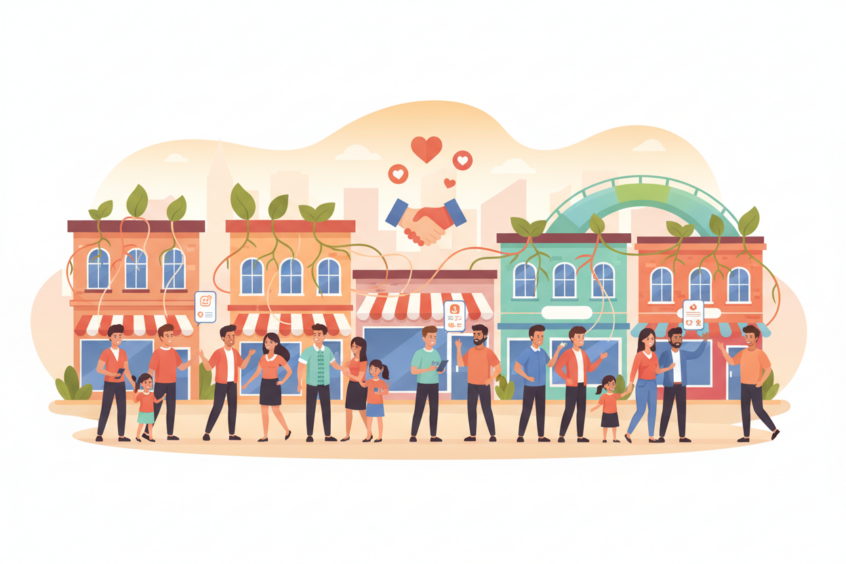
Local Marketing Services: How to Build Community Ties That Transform Your Business
In today’s digital-first world, it might seem counterintuitive to focus on local connections. Yet, businesses that master the art of community engagement often find themselves with the strongest customer loyalty, most consistent revenue streams, and deepest market penetration. Local marketing services aren’t just about putting your name on a billboard or sponsoring the little league team anymore – though those tactics still have their place. It’s about weaving your business into the very fabric of your community, creating relationships that transcend simple transactions.
When I started working with local businesses fifteen years ago, I noticed something fascinating: the companies that thrived weren’t necessarily those with the biggest advertising budgets or the flashiest marketing campaigns. They were the ones whose owners knew their customers by name, whose employees lived in the neighborhoods they served, and whose success felt inseparable from their community’s wellbeing. These businesses had cracked the code on something that big corporations spend millions trying to replicate – authentic community connection.

Understanding the Foundation of Community-Based Marketing
Community-based marketing operates on a fundamentally different principle than traditional advertising. Instead of interrupting people’s daily lives with messages about your products or services, you become part of their daily lives. This approach requires patience, authenticity, and a genuine commitment to your local area that goes beyond profit margins.
The foundation starts with understanding that your community isn’t just your customer base – it’s your ecosystem. The local school teacher might not need your B2B services directly, but her husband runs a construction company that could become your biggest client. The teenager working at the corner store today might be tomorrow’s influential business owner. Every interaction matters because communities are intricate webs of relationships where influence travels in unexpected directions.

Successful local marketing services recognize this interconnectedness and build strategies that honor it. Rather than viewing marketing as a one-way broadcast, they create opportunities for genuine dialogue and mutual benefit. This might mean offering your expertise to help solve community problems, even when there’s no immediate financial return, because the long-term relationship building pays dividends that no advertising campaign could match.
Strategic Approaches to Local Community Engagement
Effective community engagement requires more than good intentions – it demands strategic thinking and consistent execution. The most successful local businesses approach community involvement with the same rigor they apply to their core operations, because they understand that community engagement is a core operation.
One powerful strategy involves identifying the natural gathering places and events in your community, then finding meaningful ways to contribute. This doesn’t mean slapping your logo on everything and calling it sponsorship. Instead, look for opportunities where your business’s unique strengths can address real community needs. A local accounting firm might offer free tax preparation workshops for seniors, while a marketing agency could provide social media training for nonprofit organizations.
Another strategic approach focuses on creating your own community touchpoints. Some businesses become community hubs by hosting regular events, offering meeting spaces, or creating programs that bring people together. A coffee shop might host weekly poetry readings, while a fitness center could organize community fun runs. These initiatives work because they provide value first and build brand awareness as a natural byproduct.
The key is consistency and authenticity. Community members can quickly distinguish between businesses that genuinely care about their wellbeing and those that view community involvement as a marketing checkbox. The businesses that succeed long-term are those whose community engagement feels natural and sustainable, not forced or opportunistic.
Building Authentic Relationships with Local Organizations
Local organizations – from chambers of commerce to nonprofit groups to informal community associations – serve as the nervous system of most communities. Building authentic relationships with these organizations can exponentially expand your reach and credibility, but only if approached with genuine intent to contribute rather than simply extract value.
Start by identifying organizations whose missions align with your values and business strengths. If you run a financial services company, you might connect with organizations focused on financial literacy or small business development. If you operate a restaurant, food banks, school nutrition programs, or culinary education initiatives might be natural partners.
The relationship-building process requires time and consistency. Attend meetings regularly, volunteer for committees, and contribute your expertise without immediately expecting anything in return. I’ve watched business owners spend months building relationships within community organizations before seeing any direct business benefit, but when that benefit comes, it’s often substantial and long-lasting.
Remember that these relationships are most powerful when they’re reciprocal. Look for ways to help other organization members succeed in their goals, connect them with resources or contacts that might benefit them, and celebrate their achievements. When community members see you as someone who helps others succeed, they naturally want to help you succeed in return.
Leveraging Digital Tools for Local Connection
While community building has ancient roots, modern digital tools can amplify your local marketing efforts in remarkable ways. The key is using technology to enhance rather than replace face-to-face connections. Social media platforms, local online directories, and community apps can help you stay connected with community members between in-person interactions and reach people you might not otherwise encounter.
Local social media strategies should focus on sharing community news, celebrating local achievements, and highlighting other businesses and organizations in your area. When you consistently use your digital platforms to shine a spotlight on your community rather than just yourself, you position your business as a community champion rather than just another vendor.
Google My Business optimization, local SEO strategies, and online review management become particularly powerful when combined with strong community relationships. When community members know and trust you personally, they’re more likely to leave positive reviews, recommend your services online, and share your content with their networks. This creates a virtuous cycle where your digital presence reinforces your community relationships and vice versa.
Email marketing to local audiences can be incredibly effective when it focuses on community value rather than sales pitches. Regular newsletters that highlight local events, share community news, and offer helpful resources build engagement and keep your business top-of-mind for when community members need your services.
Measuring Success in Community-Centered Marketing
Measuring the success of community-centered marketing requires looking beyond traditional metrics like click-through rates and conversion percentages. While these numbers matter, they don’t capture the full value of community relationships, which often pay dividends over years rather than months.
Track relationship-based metrics such as the number of community events you participate in, the volunteer hours your team contributes, and the number of local partnerships you develop. Monitor how often community members mention your business in positive contexts, even when they’re not actively seeking your services. Pay attention to referral patterns – businesses with strong community ties often see higher referral rates and longer customer relationships.
Customer lifetime value becomes particularly important in community-based marketing because the goal is building long-term relationships rather than quick transactions. A customer acquired through community connections might have a lower initial transaction value but a much higher lifetime value due to repeat business and referrals.
Don’t forget to measure your community impact as well as your business impact. Track the outcomes of your community involvement – did the literacy program you supported help more children learn to read? Did the small business workshop you sponsored help other entrepreneurs succeed? These impacts matter both for their own sake and because they demonstrate to community members that your involvement creates real value.
Overcoming Common Challenges in Local Marketing
Building community ties isn’t without its challenges, and understanding these obstacles helps you navigate them more effectively. One common challenge is the time investment required for relationship building. Unlike digital advertising campaigns that can show results within days, community relationship building often requires months or years to show significant business impact.
This long timeline can be frustrating, especially for businesses facing immediate revenue pressures. The solution isn’t to abandon community building but to balance it with other marketing strategies that provide more immediate results. Think of community building as a long-term investment that provides stability and growth over time, while other marketing tactics handle short-term needs.
Another challenge involves managing expectations within your organization. Team members who aren’t directly involved in community activities might question the ROI of time spent at community events or volunteer activities. Address this by involving team members in community activities when possible and regularly sharing stories about how community relationships have benefited the business.
Some businesses struggle with authenticity, falling into the trap of treating community involvement as a performance rather than a genuine commitment. Community members are remarkably good at detecting insincerity, and businesses that approach community involvement with purely transactional motives often find their efforts backfire. The solution is to find genuine connections between your business values and community needs, then build your involvement around those authentic intersections.
Creating Sustainable Community Partnerships
The most successful local marketing services create partnerships that benefit all parties over the long term. Sustainable partnerships require clear communication, mutual respect, and shared commitment to community wellbeing. They also require businesses to think beyond their immediate needs and consider how they can contribute to their partners’ success.
Successful partnerships often start small and grow organically. You might begin by providing a small service or donation to a local organization, then gradually increase your involvement as you better understand their needs and capabilities. This organic growth allows both parties to build trust and find the most effective ways to work together.
Documentation and communication become crucial as partnerships develop. Clear agreements about expectations, responsibilities, and outcomes help prevent misunderstandings and ensure that partnerships remain beneficial for everyone involved. Regular check-ins and feedback sessions help partnerships evolve and improve over time.
Remember that sustainable partnerships require flexibility. Community needs change, organizations evolve, and your business circumstances shift. The partnerships that last are those that can adapt to these changes while maintaining their core commitment to mutual benefit and community improvement.
Conclusion
Building community ties through local marketing services isn’t just a business strategy – it’s an investment in the long-term health and prosperity of both your business and your community. The businesses that master this approach often find that they’ve created something more valuable than a customer base: they’ve built a community of advocates who genuinely care about their success.
The journey requires patience, authenticity, and consistent effort. There are no shortcuts to genuine relationship building, and the businesses that try to rush the process often find themselves starting over when their superficial efforts fail to create lasting connections. However, for businesses willing to invest the time and energy required, community-centered marketing provides a foundation for sustainable growth that no economic downturn or competitive threat can easily shake.
As you consider how to implement these strategies in your own business, remember that the most important element is genuine care for your community’s wellbeing. When that care is authentic, the marketing benefits follow naturally. When it’s not, no amount of strategic planning can compensate for the lack of genuine connection. Start where you are, with the resources you have, and focus on creating real value for the community members around you. The business results will follow, and you’ll have built something much more valuable than a marketing campaign – you’ll have built a legacy.
No More BS – Get a FREE Consultation
No more BS. Let’s talk real world $#!+ about what you need. You’ll meet with our top dog, and you’ll leave with a better understanding of what you need to do, and how RyCOM might help.