
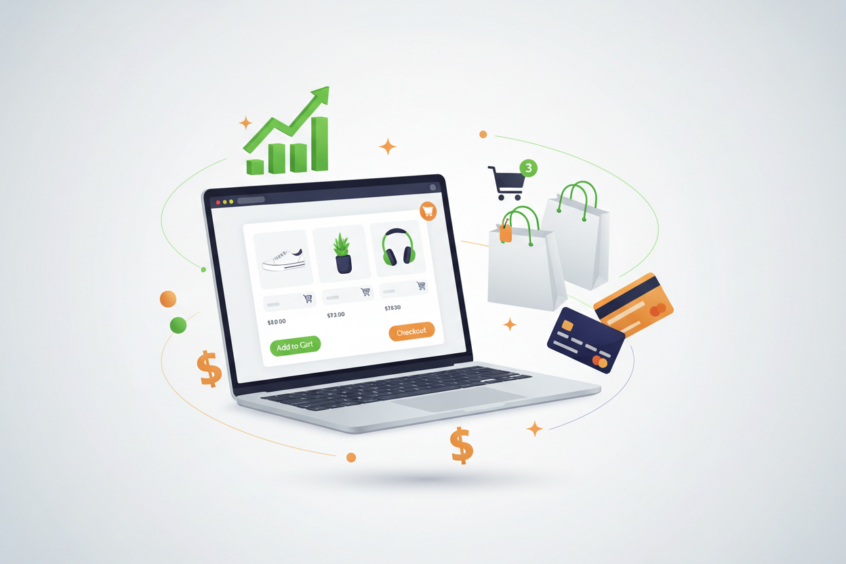
Shopify Website Design: Boosting Your Ecommerce Sales Through Strategic Design Choices
When it comes to running a successful online store, your Shopify website design isn’t just about looking pretty – it’s your silent salesperson working around the clock. Every color choice, button placement, and navigation element either helps or hinders your ability to convert visitors into paying customers. In today’s competitive ecommerce landscape, understanding how design impacts sales performance can mean the difference between a thriving business and one that struggles to gain traction.
The truth is, customers make split-second decisions about whether to trust your brand based on their first impression of your website. Studies show that it takes less than 50 milliseconds for users to form an opinion about your site, and that first impression significantly influences their purchasing decisions. This makes strategic Shopify design optimization not just important – it’s absolutely critical for your bottom line.
The Psychology Behind Effective Ecommerce Design
Understanding customer psychology is the foundation of any successful Shopify store design. When visitors land on your site, they’re subconsciously processing countless visual cues that influence their behavior. Colors trigger emotional responses – blue builds trust, red creates urgency, and green suggests growth and prosperity. Your design choices tap into these psychological triggers to guide customers toward making purchases.
Visual hierarchy plays a crucial role in directing attention where you want it most. The human eye naturally follows certain patterns when scanning a webpage, typically moving in a Z or F-shaped pattern. Smart Shopify designers leverage this behavior by placing key elements like product images, prices, and call-to-action buttons in high-attention zones.
Social proof elements, such as customer reviews, testimonials, and trust badges, work because humans are inherently social creatures who look to others for validation. When potential customers see that others have successfully purchased from your store, it reduces their perceived risk and increases their likelihood to buy.

Essential Design Elements That Drive Conversions
Your Shopify store’s conversion rate depends heavily on several critical design elements working in harmony. The navigation structure serves as your store’s roadmap, and if customers can’t easily find what they’re looking for, they’ll abandon their shopping journey faster than you can say “checkout.”
Product photography deserves special attention because it’s often the closest thing to a physical shopping experience your customers will have. High-quality, multiple-angle product images with zoom functionality help build confidence in purchase decisions. Consider including lifestyle shots that show your products in use, as these help customers envision themselves owning and using your items.
Your checkout process is where the magic happens – or where it all falls apart. A complicated, multi-step checkout process is one of the biggest conversion killers in ecommerce. Streamlining this process, offering guest checkout options, and displaying security badges can significantly reduce cart abandonment rates.
Call-to-action buttons might seem like small details, but they’re actually conversion powerhouses. The color, size, placement, and text of your CTA buttons can dramatically impact click-through rates. Testing different variations of “Add to Cart,” “Buy Now,” or “Shop Now” buttons can reveal surprising insights about what motivates your specific audience.
Mobile-First Design Strategies for Shopify Success
With mobile commerce accounting for over half of all online sales, designing with mobile users as your primary focus isn’t optional anymore – it’s mandatory. Mobile-first design means starting with the smallest screen size and working your way up, ensuring every element serves a purpose and functions flawlessly on smartphones and tablets.
Touch-friendly design becomes paramount when considering mobile users. Buttons need to be large enough for thumbs to tap accurately, and interactive elements should be spaced appropriately to prevent accidental clicks. The average human finger pad is about 10-14mm wide, so designing with this in mind prevents frustration and improves user experience.
Page loading speed on mobile devices directly correlates with conversion rates. Even a one-second delay in page load time can result in a 7% reduction in conversions. Optimizing images, minimizing code, and choosing the right Shopify theme with clean, efficient coding can make a substantial difference in your mobile performance.
Mobile navigation requires special consideration since screen real estate is limited. Hamburger menus, sticky headers, and thumb-friendly navigation patterns help users move through your store effortlessly. Remember, if users struggle to navigate your mobile site, they’ll quickly move on to a competitor who offers a smoother experience.
Building Trust Through Professional Shopify Design
Trust is the currency of ecommerce, and your website design is your primary tool for building it. Professional design elements signal to customers that you’re a legitimate business worth their money and personal information. This starts with consistent branding throughout your site – your logo, color scheme, fonts, and imagery should all work together to create a cohesive brand experience.
Security indicators play a massive role in building customer confidence. SSL certificates, security badges, and clear privacy policies help reassure visitors that their personal and financial information is safe. Displaying these trust signals prominently, especially near checkout areas, can significantly reduce hesitation and increase conversion rates.
Customer service accessibility through your design shows that you stand behind your products. Easy-to-find contact information, live chat features, and comprehensive FAQ sections demonstrate that you’re available to help when needed. Many customers won’t buy from a site where they can’t easily reach customer support if something goes wrong.
Social proof integration through reviews, ratings, and user-generated content builds credibility naturally. When potential customers see real people sharing positive experiences with your products, it creates powerful social validation that influences purchasing decisions. Featuring customer photos and testimonials prominently can dramatically boost conversion rates.
Optimizing Product Pages for Maximum Sales Impact
Your product pages are where browsers become buyers, making them the most critical pages to optimize in your Shopify store. Every element on these pages should work toward one goal: convincing visitors to add items to their cart and complete their purchase.
Product descriptions need to strike the perfect balance between informative and persuasive. Rather than simply listing features, focus on benefits and how your product solves specific problems or improves customers’ lives. Use bullet points for easy scanning, include size guides and care instructions, and address common concerns or questions.
Pricing presentation can significantly impact purchase decisions. Clear, prominent pricing with any discounts or savings highlighted helps customers quickly understand the value proposition. If you offer payment plans or financing options, make these visible to reduce price-related objections.
Related product suggestions and upselling opportunities on product pages can increase average order values substantially. Strategic placement of complementary items or upgraded versions gives customers additional options while they’re already in a buying mindset.
Performance Optimization and Speed Enhancement
Website speed isn’t just a nice-to-have feature – it’s a critical factor that directly impacts your sales performance and search engine rankings. Google considers page speed as a ranking factor, and customers expect fast-loading pages regardless of their device or connection speed.
Image optimization represents one of the biggest opportunities for speed improvement in most Shopify stores. Large, uncompressed images can slow down your site significantly. Using appropriate file formats, compressing images without losing quality, and implementing lazy loading can dramatically improve load times without sacrificing visual appeal.
Theme selection and customization choices impact performance more than many store owners realize. While feature-rich themes might seem appealing, they often come with bloated code that slows down your site. Sometimes, a simpler theme with custom modifications performs better than an all-in-one solution packed with features you don’t need.
Regular performance monitoring helps you identify and address speed issues before they impact your sales. Tools like Google PageSpeed Insights, GTmetrix, and Shopify’s own performance reports provide valuable insights into what’s slowing down your site and how to fix it.
Measuring Design Success and Continuous Improvement
The most successful Shopify store owners understand that great design is never truly finished – it’s an ongoing process of testing, measuring, and refining. Conversion rate optimization requires a data-driven approach where decisions are based on actual user behavior rather than assumptions or preferences.
A/B testing different design elements allows you to make incremental improvements that compound over time. Testing everything from button colors and placement to entire page layouts helps you understand what resonates with your specific audience. Even small improvements in conversion rates can lead to significant increases in revenue over time.
Analytics integration provides insights into how users interact with your design elements. Heat mapping tools show where users click, scroll, and spend time on your pages, revealing opportunities for optimization that might not be obvious from traditional analytics alone.
Customer feedback collection through surveys, reviews, and direct communication provides qualitative insights that complement your quantitative data. Sometimes, customers will tell you exactly what’s preventing them from making a purchase, giving you clear direction for design improvements.
Conclusion
Effective Shopify website design is far more than aesthetic appeal – it’s a strategic tool that can dramatically boost your ecommerce sales when implemented thoughtfully. From understanding the psychological triggers that influence purchasing decisions to optimizing every element for mobile users, successful design requires attention to detail and a deep understanding of your customers’ needs and behaviors.
The key to design success lies in balancing visual appeal with functionality, building trust through professional presentation, and continuously optimizing based on real user data. Remember that your website design is never truly complete; the most successful online stores are those that commit to ongoing testing, refinement, and improvement based on customer feedback and performance metrics.
By focusing on these strategic design principles and maintaining a customer-centric approach to your Shopify store development, you’ll create an online shopping experience that not only looks great but also converts visitors into loyal customers who return again and again. The investment in professional, conversion-focused design pays dividends through increased sales, higher customer satisfaction, and sustainable business growth.
No More BS – Get a FREE Consultation
No more BS. Let’s talk real world $#!+ about what you need. You’ll meet with our top dog, and you’ll leave with a better understanding of what you need to do, and how RyCOM might help.