

The Role of a Marketing Coach in Professional Development: Your Path to Career Excellence
In today’s rapidly evolving business landscape, marketing professionals face unprecedented challenges and opportunities. The digital revolution has transformed how we connect with customers, analyze data, and measure success. For many marketers, navigating this complex terrain while advancing their careers can feel overwhelming. This is where a marketing coach becomes an invaluable ally in your professional development journey.
A marketing coach serves as more than just a mentor or advisor. They’re strategic partners who understand both the technical aspects of modern marketing and the nuanced skills required for career advancement. Whether you’re a recent graduate looking to break into the field or a seasoned professional aiming for executive leadership, the right marketing coach can accelerate your growth and help you avoid common pitfalls that derail promising careers.

Understanding the Marketing Coach’s Unique Position
Marketing coaching differs significantly from traditional training programs or academic courses. While educational institutions provide foundational knowledge and training programs focus on specific skills, a marketing coach offers personalized guidance tailored to your unique career situation and goals. They bring real-world experience, industry insights, and an objective perspective that’s often missing from internal company mentorship programs.
The most effective marketing coaches have typically walked the path you’re on. They’ve experienced the challenges of managing campaigns under pressure, presenting to skeptical executives, and adapting strategies when market conditions shift unexpectedly. This experiential knowledge allows them to provide practical advice that textbooks simply can’t offer.
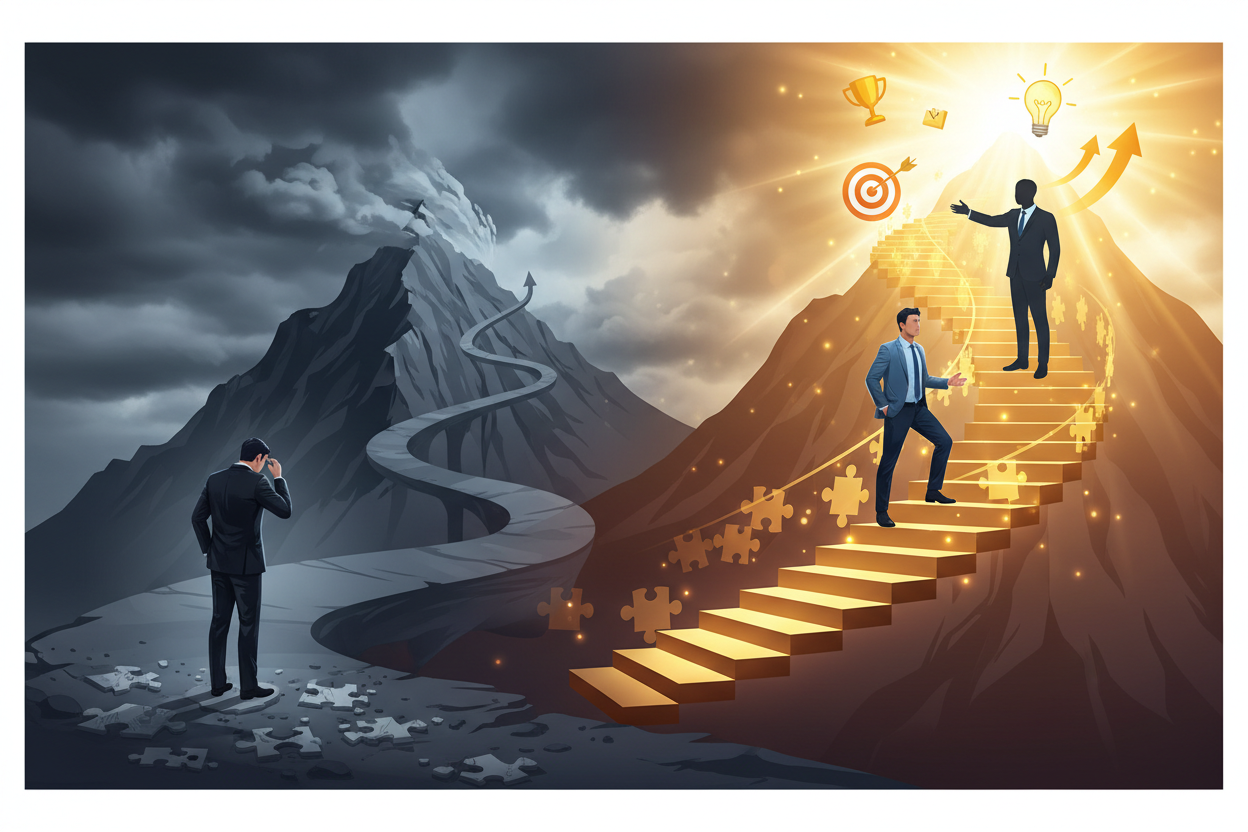
What sets marketing coaches apart is their ability to see patterns across different industries and companies. They’ve worked with various professionals facing similar challenges, giving them a broader perspective on what strategies work and which ones consistently fail. This pattern recognition becomes incredibly valuable when you’re trying to make strategic career decisions or overcome specific professional obstacles.
Core Areas Where Marketing Coaches Drive Professional Growth
Marketing coaches focus on several critical areas that directly impact your professional development. These areas often overlap and reinforce each other, creating a comprehensive approach to career advancement.
Strategic thinking represents one of the most crucial areas where coaches provide value. Many marketing professionals excel at tactical execution but struggle to think strategically about campaigns, customer segments, or market positioning. A skilled coach helps you develop this higher-level thinking by challenging your assumptions, introducing new frameworks, and encouraging you to consider long-term implications of your decisions.
Communication skills often determine whether talented marketers advance to leadership positions or remain stuck in individual contributor roles. Marketing coaches help you articulate your ideas more clearly, present data in compelling ways, and build consensus among stakeholders with different priorities. These skills become increasingly important as you move up the career ladder and need to influence executives, cross-functional teams, and external partners.
Data analysis and interpretation skills have become non-negotiable in modern marketing roles. However, many professionals struggle to move beyond basic reporting to derive actionable insights from complex datasets. Marketing coaches help bridge this gap by teaching you to ask better questions, identify meaningful patterns, and translate data into strategic recommendations that drive business results.
The Personal Branding and Leadership Development Component
One of the most overlooked aspects of marketing career development is personal branding. Ironically, many marketing professionals who excel at building brand awareness for their companies struggle to effectively market themselves within their organizations or industry. A marketing coach helps you identify your unique value proposition, develop your professional narrative, and create visibility for your contributions.
This personal branding work extends beyond updating your LinkedIn profile or networking at industry events. It involves understanding how you’re perceived by colleagues, identifying gaps between your actual contributions and how they’re recognized, and developing strategies to align your reputation with your career aspirations. Many professionals discover that their technical skills are strong, but they’ve failed to effectively communicate their impact to decision-makers.
Leadership development represents another critical area where marketing coaches provide significant value. The transition from individual contributor to team leader requires a fundamental shift in mindset and skill set. You must learn to achieve results through others, navigate organizational politics, and balance competing priorities while maintaining team morale and productivity.
Marketing coaches help you develop these leadership capabilities through role-playing exercises, feedback on real workplace situations, and guidance on building effective relationships with team members, peers, and superiors. They also help you understand different leadership styles and identify approaches that align with your personality and the needs of your organization.
Navigating Career Transitions and Industry Changes
The marketing industry’s rapid evolution means that professionals must continuously adapt their skills and career strategies. New technologies, changing consumer behaviors, and shifting business models create both opportunities and threats for marketing careers. A marketing coach helps you navigate these changes proactively rather than reactively.
Career transitions represent particularly challenging periods where coaching proves invaluable. Whether you’re moving from a small company to a large corporation, transitioning from agency to in-house roles, or shifting between industries, each change requires different strategies and preparation. Marketing coaches help you understand the cultural and operational differences you’ll encounter and develop transition plans that minimize risk while maximizing opportunity.
Industry changes often catch professionals off-guard, leaving them scrambling to catch up with new trends, technologies, or methodologies. Marketing coaches stay current with industry developments and help you anticipate changes before they become critical. This proactive approach allows you to position yourself as an early adopter rather than someone who’s always playing catch-up.
The coaching relationship also provides accountability and support during challenging transitions. Career changes often involve uncertainty, setbacks, and moments of self-doubt. Having an experienced coach who believes in your potential and provides objective guidance can make the difference between successfully navigating change and getting stuck in uncomfortable situations.
Building Long-Term Career Strategy and Goal Achievement
Many marketing professionals approach their careers tactically, making decisions based on immediate opportunities rather than long-term strategic goals. This approach often leads to career paths that lack coherence and fail to build toward meaningful objectives. Marketing coaches help you develop a strategic approach to career planning that aligns your professional development with your personal values and life goals.
This strategic approach begins with honest self-assessment. Many professionals have never taken the time to clearly identify their strengths, interests, and values, leading to career choices that feel unsatisfying despite external success. Marketing coaches guide you through this self-discovery process and help you understand how your unique combination of skills and interests can create distinctive career opportunities.
Goal setting represents another area where coaching provides significant value. Effective career goals must be specific enough to guide decision-making but flexible enough to accommodate changing circumstances. Marketing coaches help you set both short-term objectives that build momentum and long-term aspirations that provide direction and motivation.
The accountability aspect of coaching ensures that you make consistent progress toward your goals rather than getting distracted by day-to-day responsibilities. Regular coaching sessions create natural checkpoints for reviewing progress, adjusting strategies, and maintaining focus on what matters most for your career development.
Maximizing the Marketing Coach Relationship
The success of any coaching relationship depends largely on your commitment and approach. The most successful coaching clients come prepared to sessions, implement recommendations between meetings, and maintain honest communication about their challenges and progress.
Preparation involves more than just showing up to coaching sessions. It means reflecting on your experiences, identifying specific challenges you want to address, and being ready to discuss both successes and failures openly. The more specific and honest you can be about your situation, the more targeted and valuable your coach’s guidance will be.
Implementation represents the crucial bridge between coaching insights and career progress. Many professionals gain valuable insights during coaching sessions but fail to apply them consistently in their work. The most successful clients treat coaching recommendations as experiments to be tested rather than suggestions to be considered.
Honest communication about your progress, challenges, and concerns allows your coach to adjust their approach and provide more relevant guidance. If certain strategies aren’t working or if your goals change, communicating this quickly enables your coach to help you pivot rather than continuing down an ineffective path.
The Investment in Your Professional Future
Working with a marketing coach represents an investment in your professional future that often pays dividends far beyond the initial cost. The career acceleration, skill development, and strategic guidance you receive can lead to promotions, salary increases, and opportunities that wouldn’t have been available otherwise.
More importantly, the confidence, clarity, and strategic thinking skills you develop through coaching become permanent assets that continue benefiting your career long after the formal coaching relationship ends. Many professionals find that the frameworks, approaches, and mindsets they learn from coaching become integral parts of how they navigate their careers and make professional decisions.
The marketing profession will continue evolving at a rapid pace, making professional development more critical than ever. Those who invest in their growth through coaching, continuous learning, and strategic career planning will be best positioned to thrive in this dynamic environment. A marketing coach can be the catalyst that transforms your career trajectory from reactive to proactive, from tactical to strategic, and from good to exceptional.
Whether you’re looking to break through to the next level, navigate a challenging transition, or simply accelerate your professional development, the right marketing coach can provide the guidance, accountability, and expertise you need to achieve your career aspirations. The question isn’t whether coaching can help your career, but whether you’re ready to make the investment in your professional future.
No More BS – Get a FREE Consultation
No more BS. Let’s talk real world $#!+ about what you need. You’ll meet with our top dog, and you’ll leave with a better understanding of what you need to do, and how RyCOM might help.