

Content Marketing vs. Traditional Advertising: Which is More Effective?
In today’s rapidly evolving digital landscape, businesses face a crucial decision that can make or break their marketing success. Should they invest their precious marketing dollars in traditional advertising methods that have worked for decades, or pivot toward the increasingly popular content marketing strategies that everyone seems to be talking about?
This isn’t just another marketing debate—it’s a fundamental shift in how we connect with our audiences. As someone who has witnessed both approaches in action across various industries, I can tell you that the answer isn’t as straightforward as many marketing gurus would have you believe. The truth is, both strategies have their place, but understanding when and how to use each one can transform your business results.
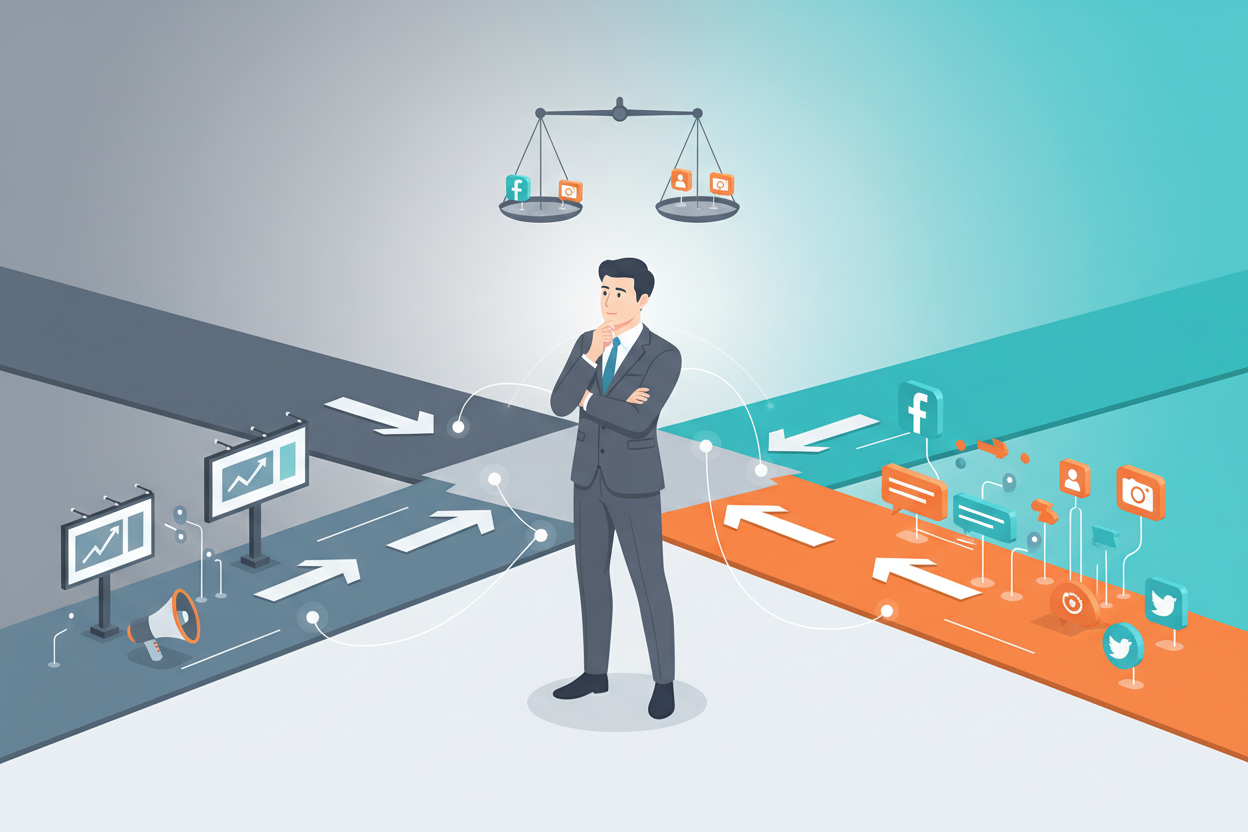
Let’s dive deep into this comparison and uncover which approach might be the game-changer your business needs.
Understanding Content Marketing: The Modern Approach
Content marketing has revolutionized how brands communicate with their audiences. Unlike traditional advertising’s direct sales approach, content marketing focuses on creating valuable, relevant content that naturally attracts and engages potential customers.
Think about the last time you searched for a solution to a problem online. Chances are, you didn’t click on the first advertisement you saw. Instead, you probably gravitated toward a helpful blog post, an informative video, or a detailed guide that promised to answer your questions. That’s content marketing in action.

This approach builds relationships over time. When a company consistently provides valuable information, solves problems, and addresses pain points without immediately pushing for a sale, something magical happens—trust develops. And in today’s skeptical marketplace, trust is the ultimate currency.
Content marketing encompasses various formats: blog posts, social media content, videos, podcasts, infographics, webinars, and email newsletters. Each piece serves as a touchpoint in the customer journey, gradually guiding prospects from awareness to consideration to purchase.
Traditional Advertising: The Time-Tested Method
Traditional advertising has been the backbone of marketing for over a century. Television commercials, radio ads, print advertisements, billboards, and direct mail have built countless successful brands and generated trillions in revenue.
The power of traditional advertising lies in its directness and reach. A well-placed television commercial during prime time can expose your brand to millions of viewers simultaneously. A strategically positioned billboard can create brand awareness among thousands of daily commuters. These methods excel at creating immediate visibility and can generate quick results when executed properly.
Traditional advertising also benefits from established trust and familiarity. Many consumers, particularly older demographics, still view traditional media as more credible and trustworthy than digital alternatives. There’s something reassuring about seeing a brand advertised on television or in a respected magazine—it suggests legitimacy and stability.
However, traditional advertising operates on an interruption model. It breaks into people’s entertainment, reading, or commuting experience to deliver a marketing message. This approach worked exceptionally well when media options were limited, but today’s fragmented attention landscape presents new challenges.
Cost Effectiveness: Where Your Budget Goes Further
When it comes to cost effectiveness, content marketing often emerges as the clear winner, especially for small to medium-sized businesses. Creating a blog post, producing a podcast episode, or developing social media content requires time and creativity but doesn’t demand the substantial upfront investment that traditional advertising typically requires.
Consider this: a single 30-second television commercial during prime time can cost anywhere from $10,000 to $200,000, depending on the market and time slot. That same budget could fund months of comprehensive content marketing activities, including professional content creation, social media management, and email marketing campaigns.
Content marketing also offers better long-term value. While a television commercial airs for a specific duration and then disappears, a well-optimized blog post can continue attracting visitors and generating leads for years. This compound effect means that content marketing investments often appreciate over time rather than depreciate.
However, it’s important to note that content marketing isn’t free. Quality content requires skilled writers, designers, videographers, and strategists. The hidden costs include time investment, tools and software, and the opportunity cost of not seeing immediate results.
Traditional advertising, while expensive upfront, can deliver immediate visibility and results. For businesses with substantial budgets and time-sensitive campaigns, the higher cost might be justified by the immediate reach and impact.
Audience Engagement: Quality vs. Quantity
The engagement landscape reveals fascinating differences between these two approaches. Traditional advertising typically generates broad reach with relatively shallow engagement. A television commercial might reach millions of viewers, but how many actually pay attention, remember the message, or take action?
Content marketing flips this equation. While it might reach fewer people initially, the engagement levels are typically much higher. When someone actively chooses to read your blog post, watch your video, or subscribe to your newsletter, they’re demonstrating genuine interest. This voluntary engagement creates stronger connections and more qualified prospects.
Interactive content takes engagement even further. Polls, quizzes, surveys, and comment sections create two-way conversations that traditional advertising simply cannot match. These interactions provide valuable insights into customer preferences, pain points, and behaviors—information that can inform future marketing strategies and product development.
Social media has amplified content marketing’s engagement potential. A single piece of valuable content can spark conversations, generate shares, and create community discussions that extend far beyond the original post. This organic amplification is nearly impossible to achieve with traditional advertising alone.
However, traditional advertising shouldn’t be dismissed entirely in the engagement conversation. Memorable commercials can create cultural moments, generate water cooler conversations, and become part of popular culture. Think about the most memorable advertisements you’ve seen—they likely created emotional connections that lasted long after the commercial ended.
Measuring Success: Analytics and ROI
One of content marketing’s greatest advantages is its measurability. Digital platforms provide detailed analytics that traditional advertising simply cannot match. You can track exactly how many people viewed your content, how long they engaged with it, which pieces drove the most conversions, and what content resonates best with different audience segments.
This granular data enables continuous optimization. If a particular blog post performs exceptionally well, you can create similar content. If a video format generates high engagement, you can invest more resources in video production. This data-driven approach leads to increasingly effective campaigns over time.
Traditional advertising measurement, while improving, remains somewhat limited. Television ratings, print circulation numbers, and billboard traffic counts provide general reach estimates, but connecting these exposures to actual sales can be challenging. Attribution becomes particularly difficult when multiple touchpoints influence a customer’s decision.
However, traditional advertising can generate immediate, measurable spikes in brand awareness, website traffic, and sales. These short-term impacts are often easier to identify and attribute than content marketing’s gradual, long-term effects.
The key is understanding that different metrics matter for different goals. If you need immediate brand awareness, traditional advertising metrics might be more relevant. If you’re building long-term customer relationships, content marketing analytics provide deeper insights.
Target Audience Considerations
Your target audience significantly influences which approach will be more effective. Different demographics consume media differently, and understanding these preferences is crucial for marketing success.
Younger audiences, particularly millennials and Gen Z, tend to be more receptive to content marketing. They actively seek information online, engage with brands on social media, and prefer authentic, helpful content over direct sales pitches. They’re also more likely to use ad blockers and skip traditional advertisements.
Older demographics often maintain stronger connections to traditional media. They watch television regularly, read newspapers and magazines, and may be more influenced by traditional advertising formats. However, this is changing as older adults increasingly adopt digital technologies.
Professional audiences might respond better to content marketing approaches like LinkedIn articles, industry reports, and educational webinars. Meanwhile, consumer audiences might be more influenced by television commercials, radio ads, or print advertisements.
Geographic considerations also matter. Rural audiences might have stronger connections to local radio and print media, while urban audiences might be more digitally focused. International audiences require understanding of local media consumption habits and cultural preferences.
The most successful marketing strategies often combine both approaches, using traditional advertising to reach broad audiences and content marketing to engage and nurture interested prospects.
Industry-Specific Effectiveness
Different industries see varying levels of success with each approach. B2B companies often find content marketing more effective because their sales cycles are longer, and decision-makers actively research solutions online. Technical products and services benefit from educational content that explains complex concepts and demonstrates expertise.
Consumer goods companies might see better results from traditional advertising, especially for impulse purchases or emotional buying decisions. Fast-moving consumer goods, fashion, and entertainment often benefit from the broad reach and visual impact of traditional advertising.
Service-based businesses typically excel with content marketing because they can demonstrate expertise, build trust, and address specific customer concerns through valuable content. Professional services, consulting, and coaching businesses often see significant results from content marketing strategies.
Retail businesses might benefit from a hybrid approach, using traditional advertising to drive immediate traffic and sales while using content marketing to build long-term customer relationships and brand loyalty.
The Hybrid Approach: Best of Both Worlds
Rather than viewing content marketing and traditional advertising as competing strategies, the most successful businesses often integrate both approaches into comprehensive marketing campaigns.
A hybrid strategy might use traditional advertising to generate initial awareness and drive traffic to content marketing assets. For example, a radio advertisement could direct listeners to a helpful blog post or free resource. A print advertisement might promote a valuable webinar or downloadable guide.
This approach leverages the immediate reach of traditional advertising while capitalizing on content marketing’s relationship-building strengths. The traditional advertising creates the first touchpoint, while content marketing nurtures the relationship and guides prospects through the sales funnel.
Successful hybrid campaigns also maintain consistent messaging across all channels. The same brand voice, visual identity, and core messages should appear in both traditional advertisements and content marketing materials, creating a cohesive brand experience.
Future Trends and Considerations
The marketing landscape continues evolving rapidly, and several trends are shaping the future effectiveness of both approaches. Traditional advertising is adapting to digital realities through connected TV, programmatic advertising, and better targeting capabilities.
Content marketing is becoming more sophisticated with artificial intelligence, personalization technologies, and interactive formats. Voice search optimization, video content, and augmented reality experiences are expanding content marketing possibilities.
Privacy regulations and changing consumer expectations are affecting both approaches. Traditional advertising must navigate increasing ad-blocking usage and consumer skepticism, while content marketing must balance personalization with privacy concerns.
The rise of influencer marketing represents a hybrid evolution, combining content creation with traditional advertising principles. This approach leverages trusted personalities to create authentic content that promotes brands and products.
Conclusion
So, which is more effective—content marketing or traditional advertising? The honest answer is: it depends on your specific situation, goals, audience, and resources.
Content marketing excels at building long-term relationships, establishing thought leadership, and generating qualified leads at a lower cost. It’s particularly effective for B2B companies, service providers, and businesses targeting younger, digitally-savvy audiences.
Traditional advertising remains powerful for creating immediate awareness, reaching broad audiences, and driving quick results. It’s especially valuable for consumer goods, time-sensitive campaigns, and reaching demographics that maintain strong traditional media consumption habits.
The most successful approach for many businesses combines both strategies strategically. Use traditional advertising to create awareness and drive initial traffic, then leverage content marketing to engage, educate, and convert those prospects into loyal customers.
Remember, marketing effectiveness isn’t just about choosing the right channel—it’s about delivering the right message to the right audience at the right time through the right medium. Whether that medium is a television commercial or a blog post matters less than whether it resonates with your audience and drives your desired outcomes.
The key is to start with your goals, understand your audience, and then select the mix of strategies that best serves both. In today’s complex marketing landscape, the businesses that thrive are those that remain flexible, data-driven, and customer-focused, regardless of which channels they choose to employ.
No More BS – Get a FREE Consultation
No more BS. Let’s talk real world $#!+ about what you need. You’ll meet with our top dog, and you’ll leave with a better understanding of what you need to do, and how RyCOM might help.