

Creating Engaging Social Media Graphics: Tips and Tools for Maximum Impact
In today’s digital landscape, social media graphics have become the backbone of successful online marketing. Whether you’re a small business owner, content creator, or marketing professional, the ability to create visually stunning graphics can make or break your social media presence. With millions of posts flooding platforms like Instagram, Facebook, and LinkedIn every minute, standing out requires more than just great content – it demands eye-catching visuals that stop the endless scroll.
The truth is, our brains process visual information 60,000 times faster than text. This means you have mere milliseconds to capture your audience’s attention before they move on to the next post. That’s where compelling social media graphics come into play, serving as your digital storefront and first impression rolled into one.

Understanding the Psychology Behind Engaging Social Media Graphics
Before diving into the technical aspects of graphic design, it’s crucial to understand what makes visuals psychologically appealing. Color psychology plays a significant role in how your audience perceives and interacts with your content. Warm colors like red and orange evoke energy and urgency, while cool blues and greens promote trust and calmness.
Visual hierarchy is another fundamental principle that determines how viewers navigate your graphics. The human eye naturally follows a Z-pattern when scanning content, starting from the top left, moving right, then diagonally down to the bottom left, and finally across to the bottom right. Understanding this pattern helps you strategically place your most important elements where they’ll have maximum impact.
Typography also speaks volumes about your brand personality. A playful, handwritten font conveys creativity and approachability, while clean, sans-serif fonts communicate professionalism and modernity. The key is ensuring your font choices align with your brand voice and remain readable across different devices and screen sizes.
Essential Design Principles for Social Media Success
Creating graphics that truly engage your audience requires mastering several core design principles. Contrast is your best friend when it comes to making text readable and elements stand out. This doesn’t just mean using light text on dark backgrounds – it also involves contrasting sizes, shapes, and colors to create visual interest.
Balance ensures your graphics feel stable and professional. You can achieve this through symmetrical balance, where elements are evenly distributed, or asymmetrical balance, where different-sized elements are strategically placed to create harmony. Many successful social media graphics use the rule of thirds, dividing the canvas into nine equal sections and placing key elements along these lines or at their intersections.
Consistency across your graphics builds brand recognition and trust. This means using the same color palette, fonts, and style elements across all your social media platforms. Think of brands like Coca-Cola or Nike – you can instantly recognize their content even without seeing their logo because of their consistent visual identity.
Platform-Specific Graphic Requirements and Best Practices
Each social media platform has its own personality and technical requirements that directly impact your graphic design strategy. Instagram thrives on visually stunning, high-quality images with a 1:1 square ratio for feed posts, though the platform now supports various aspect ratios. Stories require a 9:16 vertical format and benefit from bold, mobile-friendly text that’s easily readable on smaller screens.
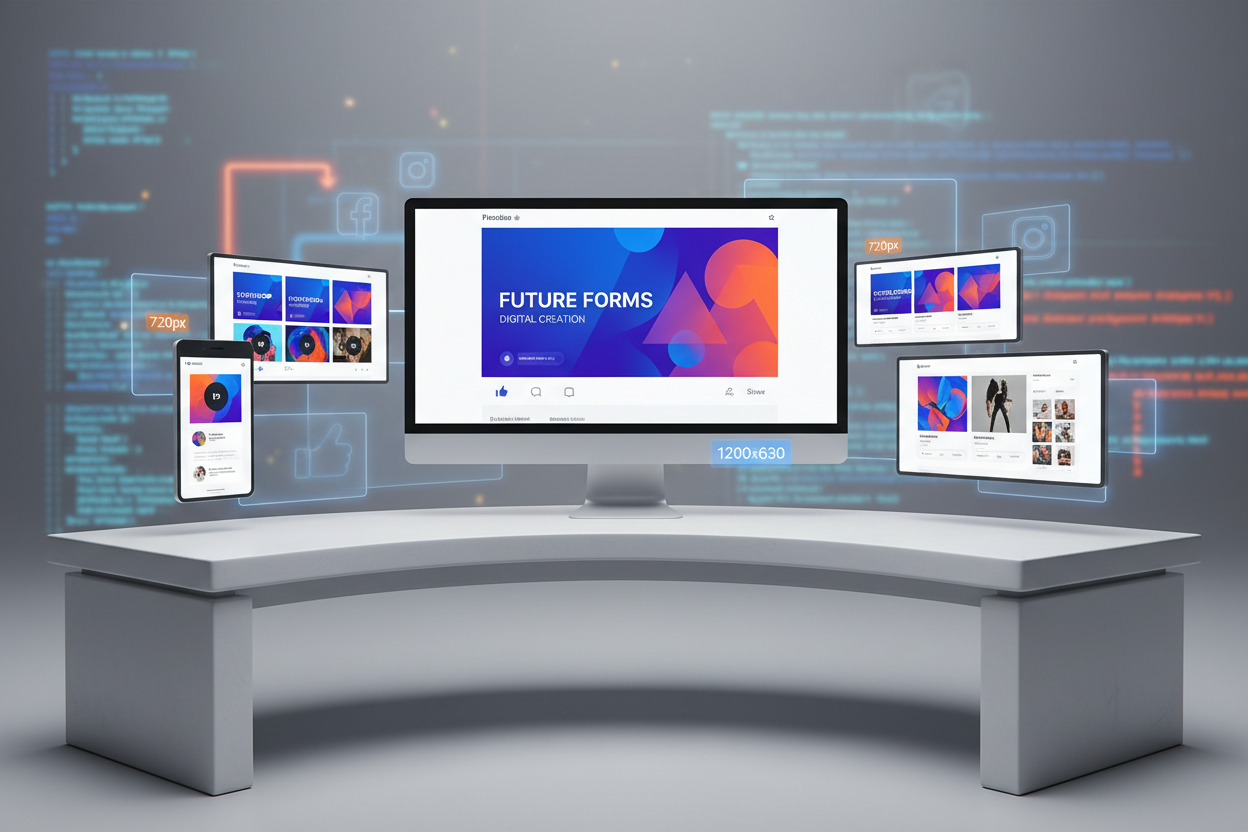
Facebook graphics work best at 1200×630 pixels for shared links, while post images should be at least 720 pixels wide for optimal quality. The platform’s algorithm favors graphics with minimal text overlay, so keep your copy concise and impactful. Video thumbnails and carousel posts offer additional opportunities to showcase your creativity while maintaining professional appeal.
LinkedIn demands a more professional aesthetic, with graphics that reflect business acumen and industry expertise. The ideal image size for LinkedIn posts is 1200×627 pixels, and the platform responds well to infographics, industry statistics, and thought leadership visuals. Twitter’s fast-paced environment requires graphics that can communicate your message quickly, with an optimal size of 1024×512 pixels for maximum engagement.
Top Free and Paid Tools for Creating Social Media Graphics
The graphic design tool landscape has evolved dramatically, offering solutions for every skill level and budget. Canva remains the go-to choice for beginners and small businesses, providing thousands of templates, stock photos, and intuitive drag-and-drop functionality. Its social media-specific templates take the guesswork out of sizing, while the brand kit feature ensures consistency across all your graphics.
For those seeking more advanced capabilities, Adobe Creative Suite offers professional-grade tools that provide unlimited creative freedom. Photoshop excels at photo manipulation and complex compositions, while Illustrator is perfect for creating vector graphics, logos, and illustrations that scale beautifully across different sizes. The learning curve is steeper, but the results can be truly spectacular.
Figma has gained popularity among design teams for its collaborative features and web-based interface. It’s particularly useful for creating design systems and maintaining brand consistency across multiple team members. The tool’s component libraries and shared styles make it easy to update designs across multiple graphics simultaneously.
Budget-conscious creators shouldn’t overlook free alternatives like GIMP, which offers many Photoshop-like features, or Unsplash and Pexels for high-quality stock photography. These resources can help you create professional-looking graphics without breaking the bank, though they may require more time investment to master.
Design Templates and Inspiration Sources
Starting with well-designed templates can significantly speed up your graphic creation process while ensuring professional results. Pinterest serves as an endless source of design inspiration, with boards dedicated to specific industries, color schemes, and design styles. Creating mood boards for your brand helps maintain visual consistency and sparks creative ideas for future graphics.
Behance and Dribbble showcase cutting-edge design work from professionals worldwide, offering insights into current trends and innovative approaches. While you shouldn’t copy designs directly, these platforms can inspire color combinations, layout ideas, and typography treatments that you can adapt to fit your brand.
Template marketplaces like Creative Market and Envato Elements offer premium design assets that can elevate your graphics instantly. These professionally designed templates often include multiple variations and color schemes, allowing you to maintain variety while staying within your brand guidelines.
Optimizing Graphics for Different Social Media Platforms
Platform optimization goes beyond just getting the dimensions right – it involves understanding how each platform compresses images and what file formats work best. Instagram, for example, compresses images significantly, so starting with high-resolution files and saving in RGB color mode ensures the best possible quality after compression.
File size matters more than many creators realize. Large files can slow down loading times, leading to decreased engagement and poor user experience. Aim for files under 1MB when possible, using tools like TinyPNG to compress images without noticeable quality loss. This is particularly important for users on mobile devices or slower internet connections.
Consider how your graphics will appear in different contexts – as thumbnails in feeds, full-size when clicked, or as part of carousel posts. Text should remain readable even when viewed as a small thumbnail, which often means using larger fonts and higher contrast than you might initially think necessary.
Measuring Success and Iterating Your Design Strategy
Creating great graphics is only half the battle – understanding what resonates with your audience is equally important. Most social media platforms provide detailed analytics showing which posts generate the most engagement, reach, and clicks. Pay attention to patterns in your top-performing graphics, noting common elements like color schemes, layouts, or content types.
A/B testing different graphic styles can provide valuable insights into your audience preferences. Try posting similar content with different visual treatments and compare the results. You might discover that your audience responds better to bold, minimalist designs over busy, detailed graphics, or that certain colors consistently outperform others.
Engagement metrics tell only part of the story. Track how your graphics contribute to broader business goals like website traffic, lead generation, or sales conversions. Tools like Google Analytics can help you understand which social media graphics drive the most valuable traffic to your website, allowing you to refine your strategy accordingly.
Conclusion
Creating engaging social media graphics is both an art and a science, requiring creativity, technical knowledge, and a deep understanding of your audience. The most successful graphic designers combine aesthetic appeal with strategic thinking, ensuring every visual element serves a purpose in achieving their marketing goals.
Remember that great design is iterative – your first graphics don’t need to be perfect, but they should be authentic to your brand and valuable to your audience. Start with the fundamentals of good design, experiment with different tools and styles, and always keep your audience’s needs at the center of your creative process.
As social media platforms continue evolving and new visual trends emerge, staying adaptable and curious will serve you well. The tools and techniques may change, but the core principle remains constant: compelling visuals that tell your brand’s story and connect with your audience on an emotional level will always be the foundation of social media success.
No More BS – Get a FREE Consultation
No more BS. Let’s talk real world $#!+ about what you need. You’ll meet with our top dog, and you’ll leave with a better understanding of what you need to do, and how RyCOM might help.