
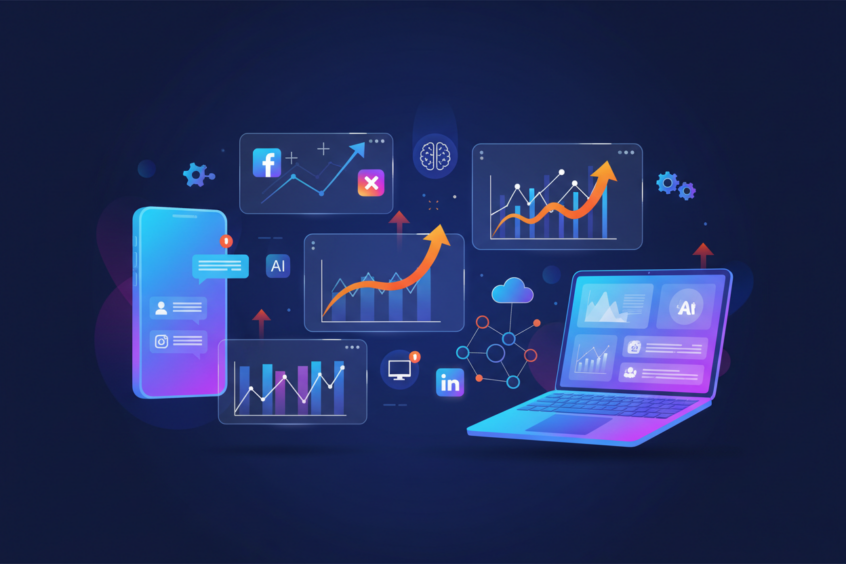
Digital Marketing Services: Trends to Watch in 2024
The digital marketing landscape continues to evolve at breakneck speed, and 2024 promises to be a year of significant transformation. As businesses worldwide adapt to changing consumer behaviors and emerging technologies, staying ahead of digital marketing trends has never been more crucial. Whether you’re a seasoned marketer or a business owner looking to enhance your online presence, understanding these upcoming trends will help you make informed decisions about your digital marketing strategy.
The past few years have taught us that adaptability is key to success in digital marketing. From the rise of short-form video content to the increasing importance of privacy-first marketing approaches, the industry has shown remarkable resilience and innovation. As we move deeper into 2024, new opportunities are emerging that could reshape how brands connect with their audiences.
Artificial Intelligence Takes Center Stage in Marketing Automation
Artificial intelligence has moved from being a futuristic concept to an essential tool in modern digital marketing services. In 2024, we’re seeing AI integration reach new heights, particularly in marketing automation and personalization. Smart algorithms are now capable of analyzing vast amounts of customer data to predict behavior patterns, optimize ad spend, and create highly targeted campaigns that resonate with specific audience segments.
Marketing teams are leveraging AI-powered tools for content creation, email marketing optimization, and customer service automation. Chatbots have become more sophisticated, offering human-like interactions that can handle complex customer inquiries. This technology isn’t just about efficiency anymore; it’s about creating meaningful connections between brands and consumers at scale.
The most exciting development is predictive analytics powered by machine learning. These systems can forecast customer lifetime value, identify potential churn risks, and recommend the best times to engage with specific customers. For businesses investing in digital marketing services, AI represents an opportunity to achieve better ROI while reducing manual workload.
Privacy-First Marketing Strategies Gain Momentum
Consumer privacy concerns have reached a tipping point, and 2024 is the year when privacy-first marketing strategies become non-negotiable. With third-party cookies being phased out and stricter data protection regulations being implemented globally, digital marketers are reimagining how they collect and use customer data.
First-party data collection has become the gold standard. Brands are investing heavily in building direct relationships with their customers through loyalty programs, exclusive content, and value-driven exchanges. This shift requires a more thoughtful approach to customer engagement, where trust and transparency are paramount.
Zero-party data, where customers voluntarily share information about their preferences and intentions, is gaining traction. Smart brands are creating interactive experiences like quizzes, polls, and preference centers that encourage customers to share valuable insights while feeling in control of their data.
The Rise of Voice Search and Conversational Marketing
Voice search optimization has evolved from a nice-to-have feature to an essential component of comprehensive digital marketing services. With smart speakers and voice assistants becoming ubiquitous in homes and mobile devices, the way people search for information is fundamentally changing.
Conversational marketing is taking center stage, with brands focusing on natural language processing and long-tail keyword optimization. The traditional approach of targeting short, specific keywords is giving way to understanding and optimizing for complete questions and conversational phrases that people actually speak.
This trend extends beyond search optimization to include voice-activated advertising and audio content marketing. Podcasts, audio blogs, and voice-enabled shopping experiences are creating new touchpoints for customer engagement. Marketers who embrace this shift early are positioning themselves to capture a growing segment of voice-first consumers.
Interactive Content and Immersive Experiences
Static content is losing its grip on audience attention as interactive and immersive experiences take precedence. In 2024, successful digital marketing campaigns are those that actively engage users rather than simply presenting information. Interactive polls, augmented reality filters, virtual product demonstrations, and gamified experiences are becoming standard elements in marketing toolkits.
Augmented reality and virtual reality technologies are no longer confined to gaming and entertainment. Retail brands are using AR to allow customers to virtually try products, while service-based businesses are creating immersive experiences that showcase their capabilities. These technologies are particularly powerful for e-commerce, where the inability to physically interact with products has always been a limitation.
User-generated content campaigns are evolving to include interactive elements that encourage participation and sharing. Brands are creating challenges, contests, and collaborative projects that turn customers into active participants in the marketing process rather than passive consumers of content.
Sustainable and Purpose-Driven Marketing
Environmental consciousness and social responsibility are no longer optional considerations for brands; they’re essential elements of successful marketing strategies. Consumers, particularly younger demographics, are making purchasing decisions based on brand values and environmental impact.
Digital marketing services are adapting to include sustainability messaging and purpose-driven campaigns that resonate with environmentally conscious consumers. This goes beyond simple green marketing to include authentic commitments to sustainable practices, transparent supply chain communications, and genuine social impact initiatives.
Brands are finding that authentic sustainability messaging not only attracts environmentally conscious customers but also improves employee engagement and brand reputation. The key is ensuring that marketing messages align with actual business practices and values, as consumers are increasingly sophisticated in detecting and rejecting superficial green-washing attempts.
Micro-Influencer Partnerships and Authentic Collaborations
The influencer marketing landscape is maturing, with a clear shift toward micro-influencers and authentic partnerships. While mega-influencers dominated the early days of social media marketing, brands are discovering that smaller influencers often deliver better engagement rates and more authentic connections with niche audiences.
Micro-influencers, typically defined as having between 1,000 and 100,000 followers, offer several advantages. Their audiences tend to be more engaged, their content feels more authentic, and their rates are more accessible for businesses of all sizes. These partnerships often result in higher conversion rates because the influencer’s recommendations feel more like personal advice from a trusted friend.
Long-term partnerships are replacing one-off sponsored posts as brands recognize the value of building ongoing relationships with content creators. These collaborations allow for more authentic storytelling and help influencers become genuine brand advocates rather than simple advertising channels.
Advanced Analytics and Attribution Modeling
As digital marketing becomes more complex, the need for sophisticated analytics and attribution modeling has never been greater. Traditional last-click attribution models are being replaced by more nuanced approaches that recognize the multi-touchpoint customer journey.
Advanced analytics platforms are now capable of tracking customer interactions across multiple channels and devices, providing a more complete picture of the customer journey. This comprehensive view enables marketers to optimize their strategies based on actual customer behavior rather than assumptions or incomplete data.
Real-time analytics and automated reporting are becoming standard features in digital marketing services. Marketers can now make data-driven decisions quickly, adjusting campaigns in real-time based on performance metrics and emerging trends. This agility is crucial in today’s fast-paced digital environment where consumer preferences and market conditions can change rapidly.
Preparing Your Business for the Future of Digital Marketing
Successfully navigating these digital marketing trends requires a strategic approach that balances innovation with proven marketing fundamentals. The most successful businesses are those that selectively adopt new technologies and strategies while maintaining focus on their core customer needs and business objectives.
Investment in team training and development is crucial as these trends reshape the digital marketing landscape. Marketing professionals need to stay current with emerging technologies, changing consumer behaviors, and evolving platform algorithms. This might involve formal training programs, industry conferences, or partnerships with specialized digital marketing services providers.
Testing and experimentation should be built into every marketing strategy. The rapidly changing nature of digital marketing means that what works today might not work tomorrow. Businesses that embrace a culture of continuous testing and optimization are better positioned to adapt to new trends and technologies as they emerge.
The year 2024 represents a pivotal moment in digital marketing evolution. The trends we’re seeing aren’t just temporary shifts; they represent fundamental changes in how consumers interact with brands and make purchasing decisions. Artificial intelligence, privacy-first approaches, voice search optimization, interactive content, sustainability messaging, micro-influencer partnerships, and advanced analytics are reshaping the digital marketing landscape in ways that will have lasting impact.
For businesses looking to thrive in this evolving environment, the key is to remain flexible and customer-focused while strategically adopting new technologies and approaches. The most successful digital marketing strategies will be those that combine cutting-edge tools with authentic, value-driven messaging that resonates with target audiences. By staying informed about these trends and thoughtfully implementing relevant strategies, businesses can position themselves for sustained growth and success in the digital marketplace.
No More BS – Get a FREE Consultation
No more BS. Let’s talk real world $#!+ about what you need. You’ll meet with our top dog, and you’ll leave with a better understanding of what you need to do, and how RyCOM might help.