

Event Marketing Design: Engaging Your Audience Through Strategic Visual Storytelling
Picture this: you walk into an event space and immediately feel drawn in by the atmosphere. The colors speak to you, the layout guides your movement naturally, and every visual element seems to tell a cohesive story. That’s the power of exceptional event marketing design – it transforms ordinary gatherings into unforgettable experiences that resonate long after the last attendee has left.
In today’s saturated market, where countless events compete for attention, your design strategy can make or break audience engagement. Whether you’re planning a corporate conference, product launch, or community festival, the visual elements you choose will either captivate your audience or leave them scrolling past to the next opportunity.
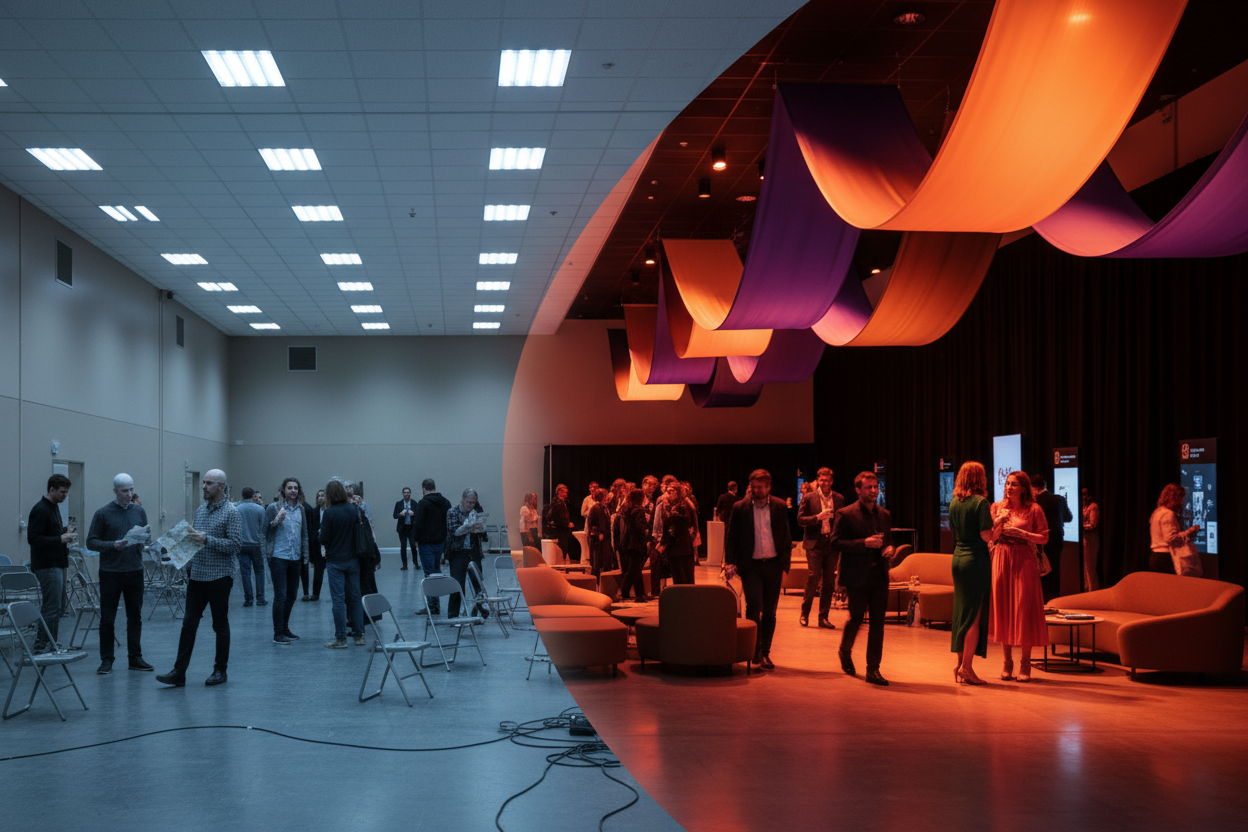
Event marketing design goes far beyond pretty graphics and trendy color schemes. It’s about creating an immersive environment that speaks directly to your target audience’s desires, needs, and emotions. When done right, it becomes a powerful tool that not only attracts attendees but also enhances their entire experience and strengthens their connection to your brand.
Understanding Your Audience: The Foundation of Effective Event Design
Before diving into color palettes and typography choices, successful event marketers invest time in truly understanding their audience. This isn’t about surface-level demographics – it’s about digging deeper into psychographics, behaviors, and motivations.
Consider the difference between designing for tech entrepreneurs versus designing for wellness enthusiasts. The tech crowd might gravitate toward clean, minimalist designs with bold geometric shapes and modern typography. Meanwhile, wellness-focused attendees often respond better to organic forms, earth tones, and softer, more flowing design elements.
Start by creating detailed audience personas that go beyond age and income. What platforms do they use? What visual styles do they engage with on social media? What are their pain points, and how can your event design address these concerns? This research phase might feel time-consuming, but it’s the difference between design that merely looks good and design that truly connects.
Smart event marketers also consider the emotional journey they want to create. Are you aiming to inspire and energize, or do you want to create a sense of calm and focus? Your design choices should support these emotional goals at every touchpoint, from the initial promotional materials to the on-site signage and digital displays.
Visual Identity: Creating a Cohesive Brand Experience
A strong visual identity serves as the backbone of your entire event marketing strategy. It’s what makes your event instantly recognizable across all platforms and materials. Think of it as your event’s personality expressed through visual elements.
Your color palette plays a crucial role in this identity. Colors evoke specific emotions and associations – blue conveys trust and professionalism, while orange suggests energy and creativity. However, the key is choosing colors that align with both your brand values and your audience’s preferences. Don’t just follow trends; choose colors that support your event’s unique story and objectives.
Typography deserves equal attention in your design strategy. The fonts you choose communicate volumes about your event’s personality. A sleek, sans-serif font might work perfectly for a tech conference, while a more decorative typeface could be ideal for a creative arts festival. Remember that readability should never be sacrificed for style – your audience needs to easily consume information across all materials.
Consistency across all touchpoints reinforces your visual identity and builds trust with your audience. This means your email campaigns, social media posts, website, printed materials, and on-site signage should all feel like they belong to the same family. When attendees see your materials, they should immediately recognize them as part of your event ecosystem.
Digital Design Strategies for Maximum Engagement
In our digital-first world, your online presence often provides the first impression of your event. Your website, social media presence, and digital advertising need to work together seamlessly to create anticipation and drive registrations.
Your event website should be more than just an information repository – it should be an experience preview. Use high-quality imagery that gives potential attendees a taste of what they can expect. Interactive elements like countdown timers, speaker spotlights, or virtual venue tours can significantly boost engagement and conversion rates.
Social media design requires a different approach than traditional marketing materials. These platforms favor authentic, shareable content that encourages interaction. Behind-the-scenes content, speaker announcements, and user-generated content campaigns can build community around your event before it even begins. Consider creating branded hashtags and social media templates that attendees can use to share their excitement.
Email marketing design should focus on clarity and action. Your promotional emails need to cut through crowded inboxes, which means compelling subject lines, scannable layouts, and clear calls-to-action. Progressive disclosure works well here – share just enough information to pique interest while providing easy paths for those who want to dive deeper.
Don’t overlook the power of video content in your digital strategy. Event trailers, speaker interviews, and testimonials from previous attendees can provide social proof and emotional connection that static images simply can’t match. These videos don’t need Hollywood-level production values, but they should align with your overall visual identity and feel authentic to your brand.
Physical Space Design: Creating Immersive Environments
The physical environment of your event is where your digital design strategy comes to life. Every element – from entrance displays to stage backdrops – should reinforce your visual identity and support the attendee experience you’re trying to create.
Wayfinding and signage design often gets overlooked, but it’s crucial for attendee satisfaction. Clear, well-designed directional signage reduces confusion and stress, allowing attendees to focus on the content and connections that matter. Your signage should be consistent with your overall visual identity while prioritizing functionality and readability from various distances and angles.
Lighting design can dramatically impact the mood and energy of your event space. Warm lighting creates intimacy and comfort, while cooler tones can enhance focus and professionalism. Consider how lighting will affect your other design elements – colors can shift dramatically under different lighting conditions, so test your materials in the actual event environment when possible.
Interactive design elements can transform passive attendees into active participants. This might include photo opportunities with branded backdrops, interactive displays where attendees can share feedback or ideas, or digital check-in stations that feel more like experiences than administrative tasks. These touchpoints should feel natural and valuable rather than forced or purely promotional.
The layout and flow of your physical space deserve careful consideration. How do you want people to move through the environment? Where are the natural gathering spots, and how can your design enhance these interactions? Sometimes the most effective design solutions are the ones that work so seamlessly that attendees don’t consciously notice them.
Measuring Design Impact and ROI
Effective event marketing design isn’t just about aesthetics – it’s about driving measurable results. Establishing clear metrics helps you understand what’s working and what needs adjustment for future events.
Registration and attendance numbers provide obvious metrics, but dig deeper into engagement data. How long do people spend on your event website? Which social media posts generate the most shares and comments? Are attendees using your branded hashtags and participating in photo opportunities? These engagement metrics often correlate with overall event satisfaction and long-term brand affinity.
Post-event surveys should include questions about the visual experience. Did attendees find the signage helpful? Did the overall design meet their expectations? Would they recommend the event to others based partly on the professional presentation? This feedback provides valuable insights for refining your design strategy.
Track the lifecycle of your design assets as well. Which promotional materials drove the most conversions? Did certain design elements perform better across different audience segments? This data helps you optimize both current campaigns and future event marketing strategies.
Don’t forget about the indirect benefits of strong design. Professional, cohesive visual presentation can lead to increased media coverage, more attractive sponsorship opportunities, and higher perceived value among attendees. These benefits might be harder to quantify immediately but contribute significantly to long-term success.
Future-Proofing Your Event Design Strategy
The events industry continues to evolve rapidly, and your design strategy needs to be flexible enough to adapt to new technologies, changing audience preferences, and unexpected circumstances like the shift to virtual and hybrid events.
Stay informed about emerging design trends, but don’t chase every new style that appears. Instead, focus on timeless principles like clarity, consistency, and audience-centricity. These fundamentals will serve you well regardless of changing aesthetic preferences.
Consider how your design strategy can work across different event formats. Can your visual identity translate effectively from in-person to virtual environments? How might augmented reality or other emerging technologies enhance your attendee experience? Building flexibility into your design system now will save time and resources as new opportunities emerge.
Sustainability is becoming increasingly important to event attendees and organizers alike. Consider how your design choices impact environmental sustainability. This might mean choosing digital displays over printed materials where appropriate, selecting sustainable printing options, or designing reusable elements that can work across multiple events.
Event marketing design is ultimately about creating connections – between your brand and your audience, between attendees and content, and between people who share common interests or goals. When your design strategy successfully facilitates these connections, it becomes much more than decoration; it becomes a vital component of your event’s success and your organization’s broader marketing objectives.
Remember that great event design doesn’t happen by accident. It requires strategic thinking, careful planning, and continuous refinement based on real-world results. By focusing on your audience’s needs, maintaining consistency across all touchpoints, and measuring the impact of your design decisions, you’ll create events that not only look professional but also deliver meaningful experiences that attendees will remember and share with others.
No More BS – Get a FREE Consultation
No more BS. Let’s talk real world $#!+ about what you need. You’ll meet with our top dog, and you’ll leave with a better understanding of what you need to do, and how RyCOM might help.