

How to Increase Sales: Data-Driven Strategies That Work
In today’s competitive business landscape, gut feelings and hunches just don’t cut it anymore. The most successful companies have one thing in common: they make decisions based on solid data rather than assumptions. If you’re looking to boost your sales performance, you’ve probably tried various tactics, but have you truly embraced the power of data-driven strategies?
The truth is, data doesn’t lie. It reveals patterns, uncovers opportunities, and guides you toward decisions that actually move the needle. Whether you’re running a small startup or managing a large enterprise, implementing data-driven sales strategies can transform your revenue trajectory in ways you might not have imagined.
Let’s dive into proven, actionable strategies that leverage data to increase your sales while building sustainable growth for your business.
Understanding Your Customer Journey Through Analytics
Before you can optimize your sales process, you need to understand exactly how your customers move from awareness to purchase. Customer journey analytics provide invaluable insights into every touchpoint, revealing where prospects engage most and where they drop off.
Start by mapping your current customer journey using tools like Google Analytics, heat mapping software, or customer relationship management platforms. Look for patterns in how customers discover your brand, what content they consume, and which channels drive the highest conversion rates. This data becomes your roadmap for optimization.
Pay special attention to conversion bottlenecks. Maybe your email open rates are strong, but click-through rates are disappointing. Perhaps visitors spend significant time on your pricing page but don’t convert. These insights tell you exactly where to focus your improvement efforts.
One e-commerce company I worked with discovered through journey analytics that customers who viewed their FAQ page were 40% more likely to make a purchase. This single insight led them to prominently feature key FAQ content throughout their site, resulting in a 15% increase in conversions within three months.
Leveraging Customer Segmentation for Targeted Sales Approaches
Not all customers are created equal, and treating them as such is leaving money on the table. Data-driven customer segmentation allows you to tailor your sales approach to different groups based on their behaviors, preferences, and purchasing patterns.
Begin by analyzing your existing customer data to identify meaningful segments. Look beyond basic demographics and consider behavioral factors like purchase frequency, average order value, product preferences, and engagement levels. Advanced analytics tools can help you uncover segments you might not have considered.
Once you’ve identified your key segments, develop targeted sales strategies for each group. High-value customers might respond well to exclusive offers and premium service, while price-sensitive segments might be more motivated by discounts and value propositions. New customers need different messaging than loyal repeat buyers.
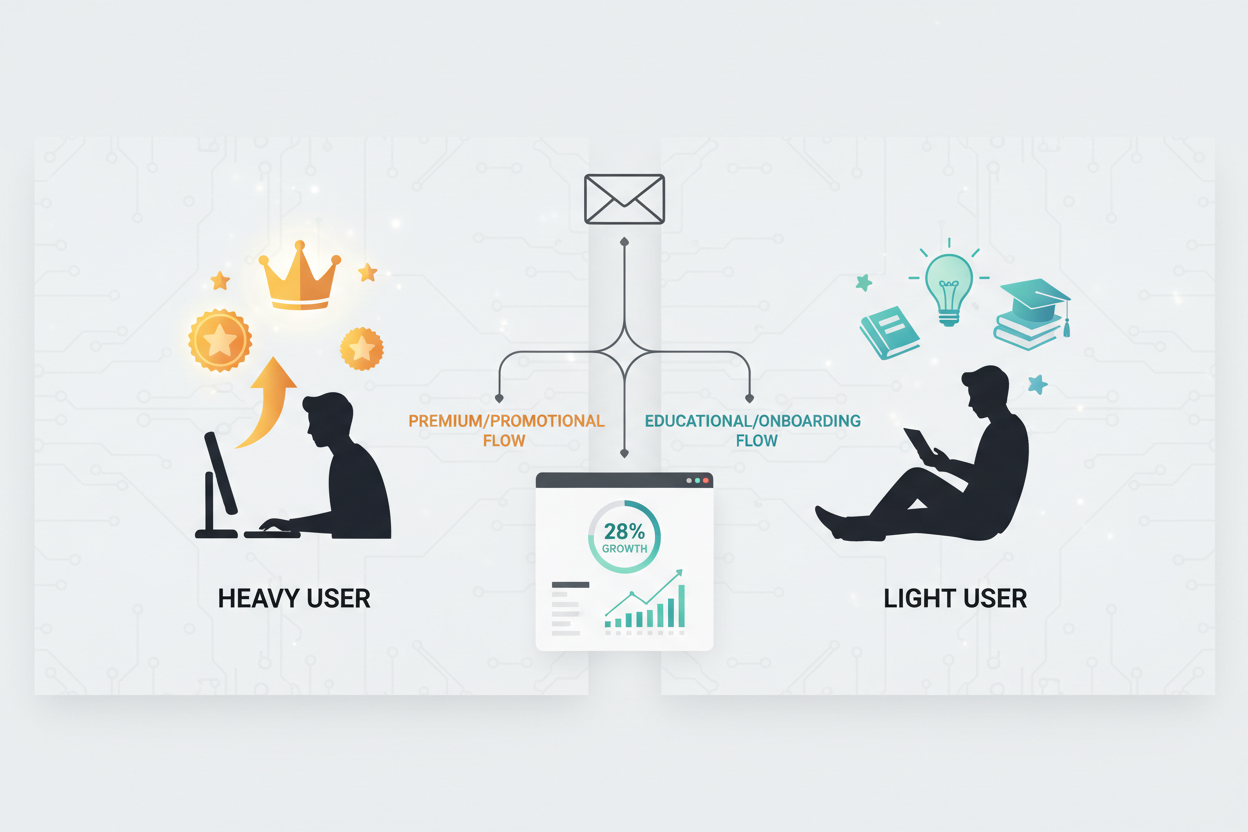
The key is testing and measuring the effectiveness of your segmented approaches. A SaaS company recently increased their sales by 28% by creating separate email campaigns for trial users based on their usage patterns. Heavy users received upgrade prompts, while light users got educational content to increase engagement first.
Optimizing Sales Funnels with Conversion Rate Analysis
Your sales funnel is only as strong as its weakest link, and data helps you identify exactly where that weakness lies. Conversion rate analysis reveals which stages of your funnel are performing well and which need immediate attention.
Track conversion rates at every stage of your funnel, from initial awareness through final purchase. Don’t just look at overall numbers; break them down by traffic source, customer segment, product category, and time periods. This granular analysis often reveals surprising insights.
For instance, you might discover that social media traffic has a lower initial conversion rate but higher lifetime value, or that mobile users behave differently than desktop users. These insights inform both your optimization priorities and resource allocation decisions.
A/B testing becomes crucial at this stage. Test different headlines, call-to-action buttons, form lengths, and page layouts to see what resonates with your audience. But remember, statistical significance matters. Don’t make changes based on small sample sizes or short testing periods.
One retail client improved their checkout conversion rate by 22% simply by analyzing where customers abandoned their carts and streamlining those specific steps. The data showed that requiring account creation was the biggest friction point, so they implemented guest checkout options.
Implementing Predictive Analytics for Sales Forecasting
Predictive analytics transforms historical data into future insights, helping you anticipate sales trends, identify high-potential prospects, and allocate resources more effectively. This isn’t just for large corporations with massive data science teams; accessible tools now make predictive analytics available to businesses of all sizes.
Start with lead scoring models that predict which prospects are most likely to convert. Analyze characteristics of your best customers and use that data to score new leads. Factors might include company size, industry, engagement level, or specific behaviors on your website.
Sales forecasting becomes more accurate when you incorporate multiple data points beyond just historical sales. Consider seasonal trends, marketing campaign performance, economic indicators, and customer lifecycle stages. The more comprehensive your data inputs, the more reliable your predictions become.
Inventory management also benefits from predictive analytics. By analyzing purchase patterns, seasonal trends, and external factors, you can optimize stock levels to meet demand without tying up excessive capital in inventory.
A manufacturing company used predictive analytics to identify customers at risk of churning, allowing their sales team to proactively reach out with retention offers. This approach reduced churn by 35% and increased average customer lifetime value significantly.
Personalizing Sales Outreach Using Data Insights
Generic sales messages get ignored, but personalized outreach based on data insights cuts through the noise. Modern customers expect relevant, timely communication that addresses their specific needs and interests.
Use behavioral data to inform your outreach timing and messaging. If a prospect downloaded a specific whitepaper, follow up with related case studies or product information. If they visited your pricing page multiple times, they might be ready for a consultation call.
Email marketing platforms now offer sophisticated automation capabilities that trigger personalized messages based on specific actions or characteristics. Set up workflows that nurture leads differently based on their engagement level, company size, or position in the buying cycle.
Social selling also benefits from data insights. Research prospects on LinkedIn and other platforms to understand their challenges, interests, and recent activities. This information helps you craft connection requests and follow-up messages that resonate personally.
Sales teams that embrace data-driven personalization typically see significantly higher response rates and shorter sales cycles. One B2B software company increased their email response rates by 45% by segmenting their outreach based on prospect behavior and industry-specific pain points.
Measuring and Tracking Key Performance Indicators
You can’t improve what you don’t measure, and successful data-driven sales strategies require consistent monitoring of the right metrics. But with so many possible KPIs, it’s important to focus on those that truly impact your bottom line.
Start with fundamental metrics like conversion rates, average deal size, sales cycle length, and customer acquisition cost. Then layer in more sophisticated measures like lead velocity rate, pipeline coverage ratio, and customer lifetime value.
Don’t just track these metrics; set up dashboards and alerts that help you spot trends and anomalies quickly. A sudden drop in lead quality or an unexpected spike in conversion rates both deserve immediate attention and investigation.
Regular performance reviews should compare actual results against predictions and goals. This analysis helps you refine your strategies and improve the accuracy of future forecasts. Look for patterns that might indicate seasonal trends, market changes, or the impact of specific marketing campaigns.
Remember that different team members need different metrics. Sales representatives care about their individual performance and pipeline health, while managers need visibility into team performance and resource allocation. Executives want to see overall revenue trends and strategic progress.
Conclusion
Data-driven sales strategies aren’t just a competitive advantage anymore; they’re essential for sustainable growth in today’s market. By understanding your customer journey, segmenting your audience, optimizing your funnel, implementing predictive analytics, personalizing your outreach, and tracking the right metrics, you create a powerful system for increasing sales consistently.
The key to success lies not just in collecting data, but in turning that data into actionable insights and measurable improvements. Start with one or two strategies that align with your current capabilities and biggest opportunities. As you see results and build confidence, expand your data-driven approach to other areas of your sales process.
Remember, the goal isn’t to replace human intuition and relationship-building skills, but to enhance them with objective insights that guide better decisions. The most successful sales professionals combine their experience and emotional intelligence with data-driven strategies to create compelling, personalized experiences that drive results.
The businesses that embrace this approach today will be the ones dominating their markets tomorrow. Your data is waiting to tell you exactly how to increase your sales. The question is: are you ready to listen?
No More BS – Get a FREE Consultation
No more BS. Let’s talk real world $#!+ about what you need. You’ll meet with our top dog, and you’ll leave with a better understanding of what you need to do, and how RyCOM might help.