

Marketing System Setup: Integrating Tools for Seamless Operations
Picture this: you’re juggling five different marketing tools, switching between tabs like a digital acrobat, and somehow your lead data got lost in translation between platforms. Sound familiar? You’re not alone. Most businesses start with a patchwork of marketing tools that don’t talk to each other, creating more chaos than clarity.
The solution isn’t adding more tools to the mix – it’s creating a unified marketing system where everything works together harmoniously. When done right, marketing system integration transforms scattered efforts into a well-oiled machine that drives results while saving you time, money, and sanity.
In this comprehensive guide, we’ll walk through the essential steps to set up an integrated marketing system that actually works for your business. Whether you’re a startup looking to build from scratch or an established company ready to streamline operations, you’ll discover practical strategies to connect your tools and create seamless workflows.
Understanding the Foundation of Marketing System Integration
Before diving into specific tools and tactics, let’s establish what marketing system integration really means. At its core, it’s about creating connections between your various marketing platforms so data flows freely, processes automate naturally, and your team can focus on strategy rather than manual tasks.
Think of it like building a house. You wouldn’t connect the plumbing to the electrical system, but you’d ensure both work together to create a functional living space. Similarly, your email marketing platform doesn’t need to do everything your CRM does, but they should share information seamlessly.
The benefits extend far beyond convenience. Integrated systems provide better data accuracy, improved customer experiences, and clearer insights into what’s actually driving results. When your tools work together, you can track a prospect’s entire journey from first website visit to final purchase, identifying exactly which touchpoints matter most.
Auditing Your Current Marketing Technology Stack
The first step toward integration is understanding what you’re working with. Most businesses accumulate marketing tools organically – someone needs email marketing, so they sign up for Mailchimp. The sales team wants better lead tracking, so they add a CRM. Before long, you’ve got a dozen different platforms with overlapping functions and zero coordination.
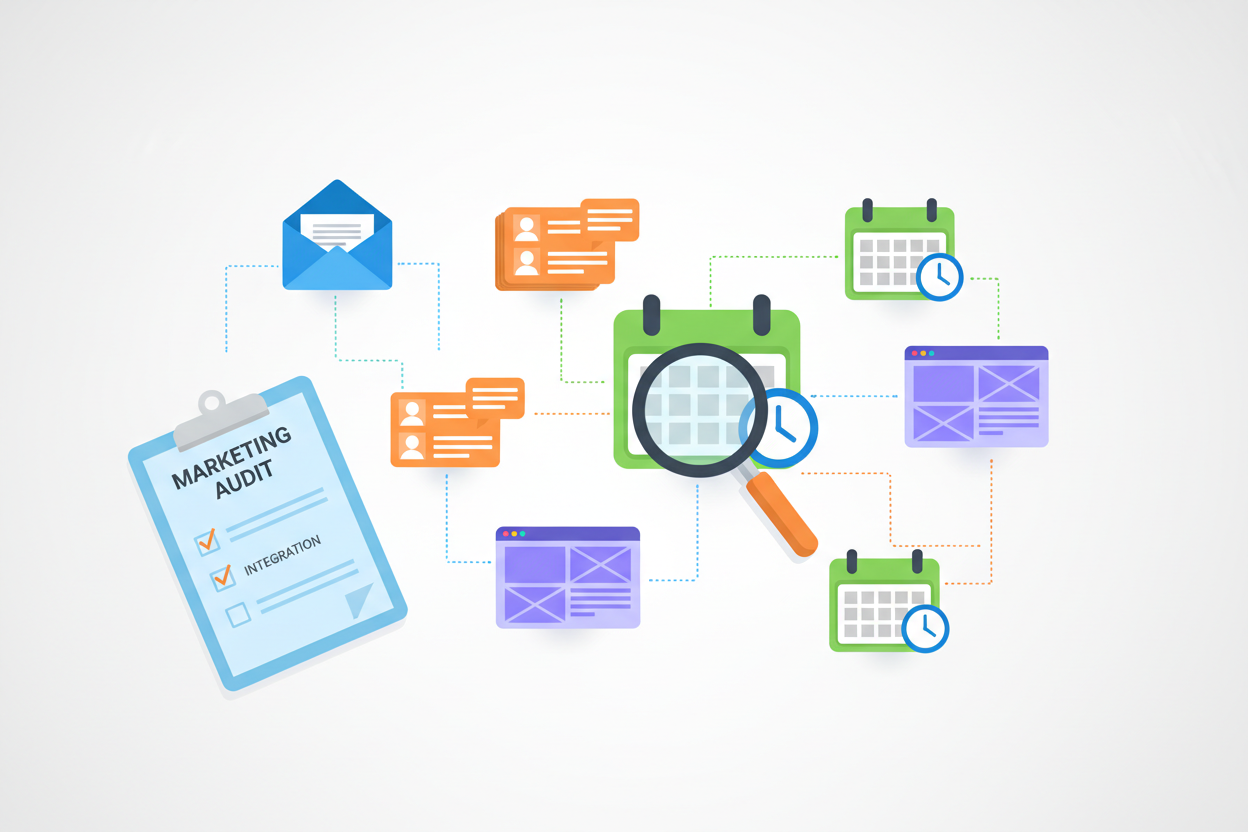
Start by creating a comprehensive inventory of every marketing tool your organization uses. Include everything from major platforms like your CRM and email marketing software to smaller tools like social media schedulers and landing page builders. For each tool, document its primary function, who uses it, and how it currently connects (or doesn’t connect) to other systems.
Next, identify the gaps and overlaps. Are you paying for three different analytics platforms that essentially do the same thing? Do you have customer data scattered across multiple systems with no single source of truth? These discoveries will guide your integration strategy and help you eliminate redundancies.
Pay special attention to your data flow. Map out how information moves between systems currently. Where does lead data originate? How does it travel from your website to your CRM to your email marketing platform? Understanding these pathways reveals bottlenecks and opportunities for improvement.
Choosing the Right Integration Approach
Not all integrations are created equal. The approach that works for a small business might be overkill for a startup or insufficient for an enterprise. Your integration strategy should match your current needs while allowing room for growth.
Native integrations offer the simplest starting point. Many modern marketing tools come with built-in connections to popular platforms. For example, most email marketing services integrate directly with major CRM systems, allowing automatic list synchronization and lead scoring updates. These connections typically require minimal technical expertise and provide reliable, ongoing data sync.
Third-party integration platforms like Zapier, Integromat, or Microsoft Power Automate expand your possibilities significantly. These services act as translators between different software platforms, enabling connections that wouldn’t otherwise exist. While they require more setup and ongoing management, they offer flexibility to create custom workflows tailored to your specific processes.
For businesses with complex needs or significant technical resources, custom API integrations provide the ultimate control. This approach requires development expertise but allows you to create exactly the connections and data flows your business needs. Consider this route if you’re using specialized software or have unique workflow requirements that standard integrations can’t address.
Essential Tool Categories for Integrated Marketing Operations
A well-integrated marketing system typically includes several core categories of tools, each serving specific functions while contributing to the overall ecosystem. Understanding these categories helps you identify gaps and plan your integration strategy effectively.
Customer Relationship Management systems serve as the central hub for most integrated marketing operations. Your CRM stores customer and prospect information, tracks interactions, and provides the foundation for personalized marketing efforts. Modern CRMs like HubSpot, Salesforce, or Pipedrive offer extensive integration capabilities, making them natural centerpieces for your marketing stack.
Email marketing platforms handle one of your most direct communication channels with prospects and customers. Tools like Mailchimp, ConvertKit, or ActiveCampaign should integrate seamlessly with your CRM, automatically updating contact information and triggering campaigns based on customer behaviors or lifecycle stages.
Analytics and reporting tools provide the insights needed to optimize your marketing efforts. Google Analytics, social media analytics, and specialized marketing attribution platforms should feed data into a centralized dashboard where you can see the complete picture of your marketing performance.
Content management systems and landing page builders create the digital experiences that convert visitors into leads and customers. Whether you’re using WordPress, Unbounce, or specialized landing page software, these tools should integrate with your lead capture and nurturing systems to ensure no potential customer falls through the cracks.
Setting Up Your Customer Data Platform
The heart of any integrated marketing system is clean, accessible customer data. Without a reliable foundation of customer information, even the most sophisticated integrations will produce poor results. This is where a customer data platform or centralized data strategy becomes crucial.
Start by establishing a single source of truth for customer information. This might be your CRM, a dedicated customer data platform, or even a well-structured database. The key is ensuring that all other systems either pull from or push to this central repository, maintaining consistency across your entire marketing stack.
Data hygiene plays a critical role in successful integration. Duplicate records, inconsistent formatting, and outdated information create problems that multiply across integrated systems. Implement regular data cleaning processes and establish standards for how information gets entered and updated across platforms.
Consider implementing progressive profiling to gradually build comprehensive customer profiles over time. Rather than overwhelming prospects with lengthy forms, collect basic information initially and gather additional details through subsequent interactions. This approach improves conversion rates while building the rich customer profiles that power effective personalization.
Automating Workflows for Maximum Efficiency
Integration without automation is like buying a sports car and never leaving first gear. The real power of connected marketing systems emerges when you automate repetitive tasks and create intelligent workflows that respond to customer behaviors and preferences.
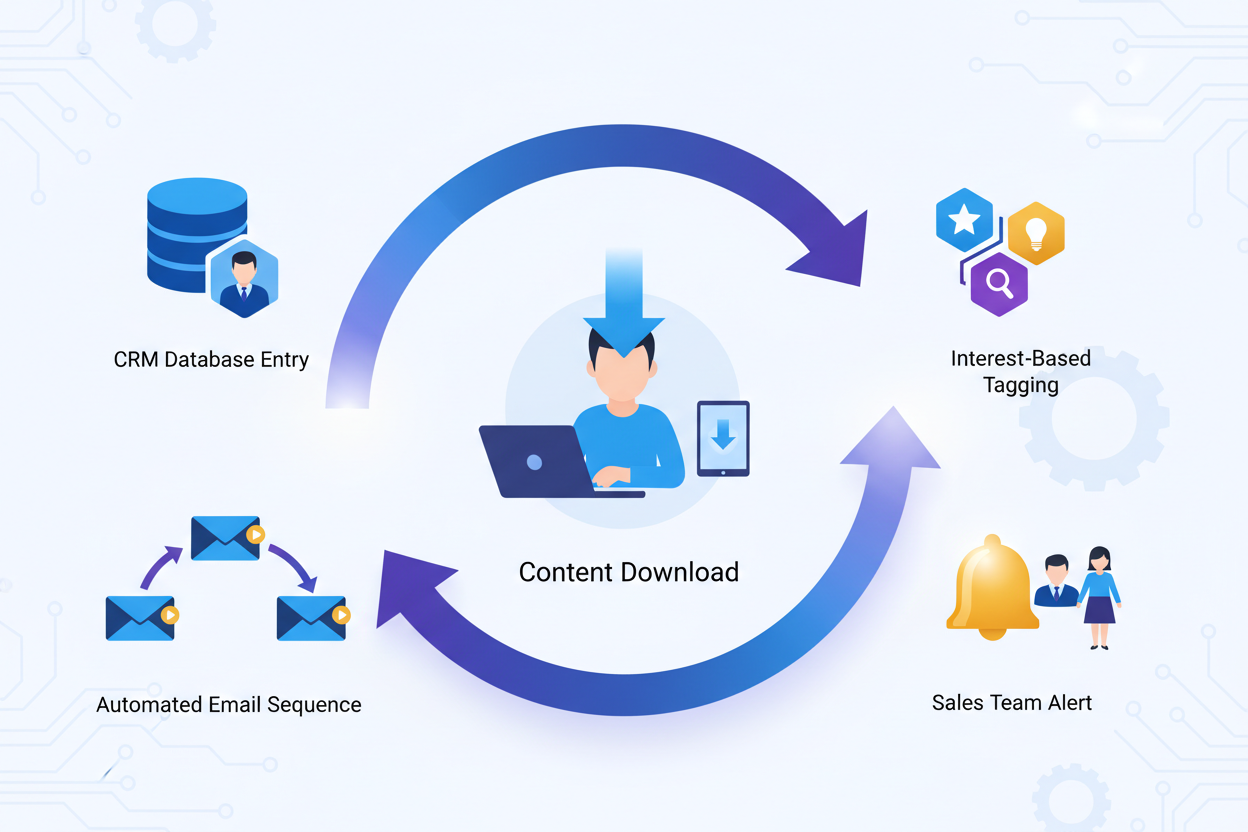
Lead nurturing represents one of the most impactful automation opportunities. When someone downloads a white paper from your website, an automated workflow can add them to your CRM, tag them based on their interests, enroll them in a relevant email sequence, and notify your sales team if they meet certain criteria. This entire process happens instantly and consistently, regardless of when the download occurs.
Customer lifecycle automation helps maintain engagement throughout the entire customer journey. New customers might automatically receive onboarding emails, while long-time customers get loyalty program invitations or upgrade offers. These workflows ensure consistent communication while freeing your team to focus on strategy and relationship building.
Behavioral triggers add another layer of sophistication to your automated workflows. When integrated systems track customer actions across multiple touchpoints, you can create highly targeted responses. Someone who visits your pricing page multiple times might automatically receive a personalized demo invitation, while customers who haven’t engaged recently could get re-engagement campaigns.
Measuring Success and Optimizing Performance
An integrated marketing system generates vast amounts of data, but data without analysis is just digital clutter. Establishing clear metrics and regular optimization processes ensures your integration efforts translate into measurable business results.
Start with baseline measurements before implementing major integrations. How long does it currently take to move a lead from initial contact to qualified opportunity? What’s your customer acquisition cost across different channels? How much time does your team spend on manual data entry and system management? These benchmarks help you quantify the impact of your integration efforts.
Focus on metrics that reflect the health of your entire marketing system, not just individual tools. Lead velocity – how quickly prospects move through your sales funnel – often improves dramatically with better integration. Customer lifetime value may increase as integrated systems enable better personalization and timing of offers.
Regular system audits help maintain optimal performance over time. As your business grows and evolves, your integration needs will change too. Schedule quarterly reviews to assess system performance, identify new automation opportunities, and ensure your tools continue serving your business objectives effectively.
Common Integration Challenges and Solutions
Even well-planned integration projects encounter obstacles. Understanding common challenges and their solutions helps you navigate the process more smoothly and avoid costly mistakes.
Data synchronization issues top the list of integration headaches. Different systems often format information differently, leading to sync failures or corrupted data. Address this by establishing clear data standards before connecting systems and implementing validation rules that catch formatting errors before they propagate.
API limitations can restrict the depth and frequency of integrations between certain platforms. Some systems limit how often data can be synchronized or which fields can be shared. Research these limitations during your planning phase and consider alternative approaches or supplementary tools when necessary.
Team adoption challenges often derail otherwise successful integration projects. Even the most elegant system fails if your team doesn’t use it consistently. Invest in proper training, create clear documentation, and involve key users in the setup process to ensure buy-in and proper utilization.
Building for Future Growth and Scalability
Your marketing system integration should grow with your business, not constrain it. Building scalability into your initial setup saves significant time and resources as your operations expand.
Choose platforms and integration methods that can handle increased volume and complexity over time. A solution that works perfectly for 1,000 contacts might struggle with 100,000. Similarly, simple automation workflows that serve a small team might become bottlenecks as your organization grows.
Plan for additional tool integrations from the beginning. Your current stack might meet today’s needs perfectly, but business growth often requires new capabilities. Ensure your core systems can accommodate future additions without requiring complete overhauls.
Document everything thoroughly as you build your integrated system. Clear documentation helps new team members understand workflows, simplifies troubleshooting, and makes future modifications much easier. Include not just how systems connect, but why specific integration choices were made.
Conclusion
Creating an integrated marketing system isn’t just about connecting tools – it’s about building a foundation for sustainable growth and improved customer experiences. When your marketing platforms work together seamlessly, you eliminate manual tasks, reduce errors, and gain clearer insights into what drives results.
The journey from disconnected tools to integrated operations takes time and effort, but the payoff extends far beyond operational efficiency. Businesses with well-integrated marketing systems typically see improved lead quality, shorter sales cycles, and better customer retention. More importantly, they free their teams to focus on strategy and creativity rather than data management and manual processes.
Start small, measure everything, and build gradually. You don’t need to integrate every tool on day one. Begin with your most critical connections – perhaps linking your CRM to your email marketing platform – and expand from there. Each successful integration builds momentum and demonstrates value, making it easier to justify and implement additional improvements.
Remember that integration is an ongoing process, not a one-time project. As your business evolves, your systems should evolve too. Regular reviews, continuous optimization, and staying current with new integration possibilities ensure your marketing system remains a competitive advantage rather than a maintenance burden.
The businesses that thrive in today’s competitive landscape are those that can move quickly, personalize effectively, and make data-driven decisions. An integrated marketing system provides the foundation for all three capabilities, transforming scattered tools into a powerful engine for growth.
No More BS – Get a FREE Consultation
No more BS. Let’s talk real world $#!+ about what you need. You’ll meet with our top dog, and you’ll leave with a better understanding of what you need to do, and how RyCOM might help.