
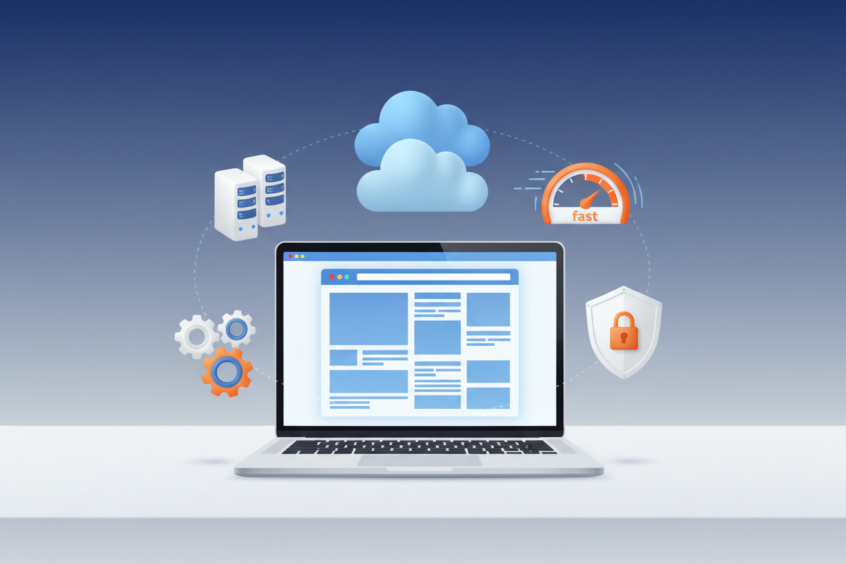
Web Hosting and Design: How to Choose Features That Matter
Starting a website can feel overwhelming, especially when you’re bombarded with technical jargon and endless feature lists from hosting providers. I remember when I first launched my website – I spent hours comparing hosting plans, getting lost in acronyms like SSD, CDN, and SSL. The truth is, not all features are created equal, and understanding which ones actually impact your website’s success can save you both time and money.
Whether you’re building your first blog or launching an e-commerce empire, choosing the right web hosting features is crucial for your site’s performance, security, and growth potential. Let’s cut through the marketing noise and focus on what really matters for your web hosting and design needs.
Understanding Your Website’s Core Requirements
Before diving into specific hosting features, you need to honestly assess what type of website you’re building. A simple portfolio site has vastly different needs than a high-traffic online store. I’ve seen too many people pay for premium features they’ll never use, or worse, choose budget hosting that can’t handle their actual requirements.
Consider your website’s purpose, expected traffic volume, and technical complexity. Are you planning to sell products online? Will you be handling sensitive customer data? Do you expect rapid growth in the coming months? These questions will guide your feature selection and prevent costly migrations down the road.

Your budget also plays a significant role, but remember that cheap hosting often becomes expensive when you factor in downtime, poor performance, and the need to upgrade quickly. Think of web hosting as an investment in your online presence, not just another monthly expense.
Essential Performance Features for Every Website
Website speed isn’t just about user experience – it’s a ranking factor that directly impacts your search engine visibility. When evaluating hosting providers, performance features should be your top priority.
Solid State Drives (SSD) storage is no longer a luxury; it’s a necessity. SSDs can load your website files up to 20 times faster than traditional hard drives. This might seem like a small detail, but those milliseconds add up, especially when you’re competing for user attention in an increasingly impatient digital world.
Content Delivery Networks (CDN) deserve special attention if you’re targeting a global audience. A CDN stores copies of your website on servers worldwide, ensuring visitors from different geographic locations experience similar loading speeds. Many hosting providers now include basic CDN services, making this powerful feature more accessible than ever.
Server location matters more than you might think. If your primary audience is in the United States, hosting your website on servers in Asia will create unnecessary delays. Choose hosting providers with data centers close to your target audience for optimal performance.
Security Features That Protect Your Investment
Website security isn’t optional in today’s threat landscape. A single security breach can destroy years of hard work and damage your reputation permanently. When evaluating hosting providers, security features should be non-negotiable.
SSL certificates encrypt data between your website and visitors’ browsers, protecting sensitive information and boosting your search engine rankings. Google has made HTTPS a ranking signal, so websites without SSL certificates are at a disadvantage. Most reputable hosting providers now include free SSL certificates, so there’s no excuse for skipping this essential feature.
Regular automated backups are your safety net when things go wrong. I learned this lesson the hard way when a plugin update corrupted my website, and I discovered my hosting provider’s backup system hadn’t been working for weeks. Look for providers offering daily backups with easy restoration options, and always test the backup recovery process before you need it.
Malware scanning and removal services provide ongoing protection against threats. While no security system is 100% foolproof, having professional monitoring can catch issues before they impact your visitors or search engine rankings.
Scalability and Resource Management
Your website’s needs will evolve, and your hosting should grow with you. Scalability features prevent the headache of migrating to new hosting providers as your traffic increases.
Bandwidth and storage limits can quickly become bottlenecks as your content library grows. Many hosting providers advertise “unlimited” resources, but read the fine print carefully. True unlimited hosting doesn’t exist – there are always fair usage policies that could affect high-traffic websites.
CPU and RAM allocation directly impact your website’s ability to handle simultaneous visitors. Shared hosting plans typically limit these resources, which works fine for low-traffic sites but can cause problems during traffic spikes. Virtual Private Server (VPS) or dedicated hosting options provide more predictable resource allocation.
Easy upgrade paths allow you to scale your hosting without technical headaches. The best hosting providers offer seamless transitions between hosting tiers, maintaining your website’s uptime during the upgrade process.
Design-Friendly Hosting Features
Modern website design relies heavily on hosting capabilities that support contemporary web technologies. These features directly impact your design possibilities and user experience.
Multiple PHP versions and database support ensure compatibility with various content management systems and design frameworks. If you’re using WordPress, Drupal, or custom applications, verify that your hosting provider supports the required technologies and keeps them updated.
Staging environments are invaluable for testing design changes without affecting your live website. This feature allows you to experiment with new themes, plugins, or code modifications in a safe environment before pushing changes to your production site.
File compression and optimization tools can significantly improve your website’s loading speed without requiring technical expertise. Look for hosting providers that offer automatic image optimization, file minification, and caching solutions.
Technical Support and Reliability Standards
Even the most user-friendly hosting can present challenges, making quality technical support essential for maintaining your online presence.
24/7 support availability ensures help is available when you need it most. Website emergencies don’t follow business hours, and downtime during peak traffic periods can be costly. However, availability isn’t everything – the quality and expertise of support staff matter just as much.
Multiple support channels provide flexibility in how you get help. Live chat offers immediate assistance for urgent issues, while ticket systems work well for complex problems requiring detailed explanations. Phone support can be valuable for critical situations, though many hosting providers are moving toward chat-based support systems.
Uptime guarantees reflect a hosting provider’s confidence in their infrastructure reliability. While 99.9% uptime sounds impressive, it still allows for over 8 hours of downtime per year. Look for providers offering 99.95% or higher uptime guarantees, backed by service level agreements that provide compensation for excessive downtime.
Making the Final Decision
Choosing the right web hosting features requires balancing your current needs with future growth potential. Start by identifying your must-have features based on your website type and audience, then compare providers that meet these essential requirements.
Don’t be swayed by marketing gimmicks or feature lists that sound impressive but don’t align with your actual needs. A hosting provider offering 50 email accounts might seem generous, but it’s irrelevant if you’re using external email services like Gmail or Outlook.
Consider the total cost of ownership, including setup fees, renewal rates, and potential upgrade costs. Many hosting providers offer attractive introductory pricing that increases significantly upon renewal. Factor these long-term costs into your decision-making process.
Read reviews from actual customers, focusing on experiences with support quality, uptime reliability, and performance consistency. While no hosting provider is perfect, patterns in customer feedback can reveal potential issues or strengths.
Selecting the right web hosting features is an investment in your website’s future success. By focusing on performance, security, scalability, and reliable support, you’ll create a solid foundation for your online presence. Remember that the cheapest option isn’t always the most cost-effective, and the most expensive doesn’t guarantee the best value. Take time to understand your specific needs, compare options carefully, and choose a hosting provider that aligns with your goals and budget. Your website’s performance, security, and growth potential depend on making this decision thoughtfully.
No More BS – Get a FREE Consultation
No more BS. Let’s talk real world $#!+ about what you need. You’ll meet with our top dog, and you’ll leave with a better understanding of what you need to do, and how RyCOM might help.