
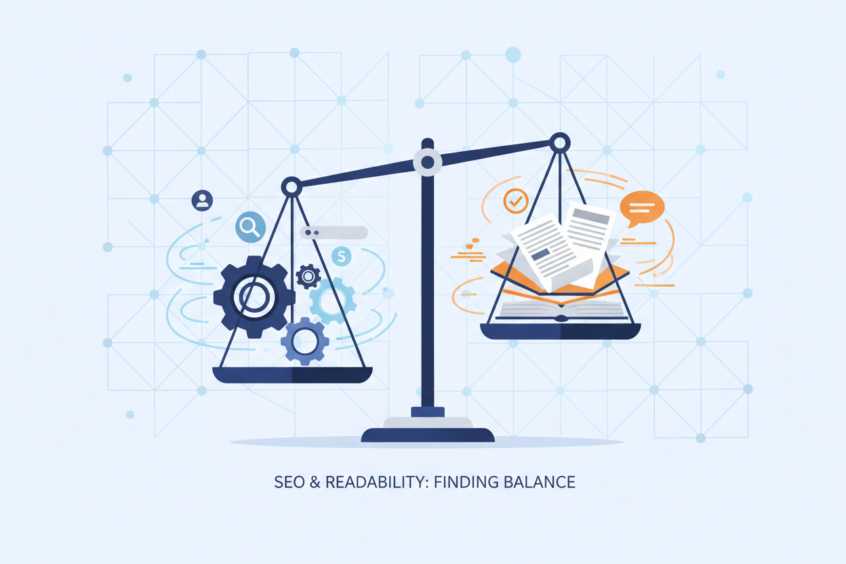
Website Content Writing: How to Balance SEO with Readability
As a content writer in today’s digital landscape, you’ve probably found yourself caught between two seemingly opposing forces: creating content that ranks well in search engines and writing pieces that genuinely connect with your human audience. It’s a balancing act that many writers struggle with, often leaning too heavily toward one side and sacrificing the other.
The good news? You don’t have to choose between SEO optimization and reader engagement. When done right, these two elements work together harmoniously, creating content that not only climbs the search rankings but also keeps readers coming back for more. Let me share some insights I’ve gathered from years of navigating this delicate balance.

Understanding the SEO vs Readability Challenge
The tension between SEO and readability often stems from a fundamental misunderstanding of what search engines actually want. Many writers still operate under outdated assumptions that Google rewards keyword stuffing and mechanical, robot-friendly content. However, modern search algorithms have evolved significantly, becoming increasingly sophisticated at recognizing and rewarding content that serves real human needs.
Search engines now prioritize user experience signals like time spent on page, bounce rate, and engagement metrics. This means that readable, engaging content naturally performs better in search results. When readers stay longer on your page, share your content, and return to your site, you’re sending powerful signals to search engines that your content is valuable.

The challenge isn’t really about choosing between SEO and readability—it’s about understanding how to make them work together effectively. Think of SEO as the vehicle that gets readers to your content, and readability as what keeps them there and brings them back.
Writing for Humans First, Search Engines Second
I’ve learned that the most effective approach is to write primarily for your human audience while keeping SEO principles in mind. This means starting with your reader’s needs, questions, and pain points, then weaving in optimization elements naturally.
When you begin with a human-centered approach, your content automatically becomes more engaging and valuable. You’re addressing real problems, providing genuine solutions, and creating content that people actually want to read and share. This natural engagement is exactly what search engines are looking for when they evaluate content quality.
Consider your audience’s reading experience at every step. Are you answering their questions clearly? Is your content easy to scan and digest? Are you providing actionable insights they can implement? When you focus on these human elements, the technical SEO aspects become much easier to integrate seamlessly.
Strategic Keyword Integration Without Compromising Flow
Keywords remain important for SEO, but the days of awkward keyword stuffing are long gone. Modern keyword integration requires finesse and a deep understanding of natural language patterns. The goal is to include your target keywords in ways that feel organic and enhance rather than disrupt the reading experience.
Start by researching keywords that align with your audience’s actual search behavior. Look for long-tail keywords and question-based phrases that reflect how people really talk and search. These tend to integrate more naturally into conversational content and often have less competition in search results.
When incorporating keywords, focus on semantic variations and related terms rather than exact-match repetition. Search engines understand context and synonyms, so you can maintain keyword relevance while keeping your writing fresh and varied. This approach also makes your content more comprehensive and valuable to readers.
Pay special attention to your headlines, subheadings, and the first paragraph of your content. These areas carry more SEO weight, but they’re also crucial for capturing reader attention. Craft headlines that include your target keywords while promising clear value to your audience.
Optimizing Content Structure for Both Users and Search Engines
Well-structured content serves both SEO and readability goals simultaneously. Search engines use your content structure to understand your topic and determine relevance, while readers rely on clear organization to quickly find the information they need.
Use descriptive headings and subheadings that incorporate relevant keywords naturally. These serve as signposts for both search engine crawlers and human readers, making your content easier to navigate and understand. Think of your headings as a roadmap that guides readers through your content logically.
Break up long paragraphs into shorter, more digestible chunks. Online readers tend to scan rather than read word-for-word, so white space and shorter paragraphs make your content more approachable. This improved readability also reduces bounce rates, which positively impacts your SEO performance.
Consider using formatting elements like bold text, italics, and bullet points strategically. These help readers quickly identify key information while also providing subtle SEO signals about important concepts in your content.
Creating Engaging Content That Satisfies Search Intent
Understanding search intent—the reason behind a user’s search query—is crucial for creating content that performs well both in search results and with readers. When you align your content with what searchers are actually trying to accomplish, you naturally create more engaging and useful pieces.
Research the types of content that currently rank for your target keywords. Are searchers looking for how-to guides, product comparisons, or informational articles? Understanding the format and depth that users expect helps you create content that meets their needs while competing effectively in search results.
Don’t just focus on providing information—aim to provide the best, most comprehensive answer to your audience’s questions. This might mean going deeper than your competitors, offering unique insights, or presenting information in a more accessible way. Quality and comprehensiveness are ranking factors that also happen to create better user experiences.
Measuring Success: Balancing SEO Metrics with User Engagement
Success in balancing SEO and readability requires monitoring both technical SEO metrics and user engagement signals. Traditional SEO metrics like keyword rankings and organic traffic are important, but they tell only part of the story.
Pay attention to user engagement metrics such as time on page, pages per session, and return visitor rates. These metrics indicate whether your content is truly resonating with readers, not just attracting clicks. High engagement often correlates with better long-term SEO performance as search engines recognize user satisfaction.
Monitor your content’s social sharing and backlink acquisition as well. When people share your content or link to it from their own sites, it’s a strong signal that you’ve created something genuinely valuable. These social and authority signals contribute significantly to SEO success while indicating reader satisfaction.
Use tools like Google Analytics and Search Console to track how users interact with your content. Look for patterns in user behavior that might indicate where you’re succeeding or where improvements are needed. This data-driven approach helps you refine your balance between optimization and readability over time.
Common Pitfalls to Avoid
One of the biggest mistakes writers make is over-optimizing their content at the expense of natural flow. When every sentence feels forced to include keywords or when the writing becomes robotic and unnatural, you’ve tipped too far toward SEO at the expense of readability.
Avoid the temptation to stuff keywords into your content unnaturally. Modern search engines are sophisticated enough to recognize and penalize obvious keyword stuffing. Instead, focus on creating comprehensive, valuable content that naturally incorporates relevant terms and concepts.
Don’t neglect the importance of original, unique perspectives in your content. While SEO research can guide your topics and keywords, your unique insights and experiences are what will set your content apart from competitors and create genuine value for readers.
Be careful not to sacrifice accuracy or helpfulness for the sake of SEO. Misleading headlines or content that doesn’t deliver on its promises might generate initial clicks, but they’ll hurt your long-term credibility and search performance through high bounce rates and poor user signals.
The Future of SEO and Content Writing
As search engines continue to evolve, the line between SEO optimization and quality writing continues to blur. Artificial intelligence and machine learning are making search algorithms increasingly sophisticated at understanding content quality, user intent, and genuine value.
This evolution means that the future belongs to content creators who can seamlessly blend optimization techniques with compelling, human-centered writing. The writers who succeed will be those who understand that SEO and readability aren’t competing priorities—they’re complementary aspects of creating truly effective content.
Voice search and conversational AI are also changing how people interact with content, emphasizing the importance of natural language and conversational tone. Content that sounds natural when read aloud is becoming increasingly important for SEO success.
Conclusion
Balancing SEO with readability isn’t about finding a compromise between two opposing forces—it’s about recognizing that they’re naturally aligned when approached correctly. The best SEO strategy is creating content that genuinely serves your audience’s needs, answers their questions comprehensively, and provides real value.
By focusing on your readers first and integrating SEO elements thoughtfully, you can create content that performs well in search results while building genuine connections with your audience. Remember that search engines are ultimately trying to serve their users the best possible content, so when you create truly valuable, readable content, you’re working with the algorithms rather than against them.
The key is to stay focused on quality, maintain a natural writing voice, and always prioritize the user experience. When you get this balance right, you’ll find that your content not only ranks well but also builds the kind of engaged, loyal audience that drives long-term success for your website or business.
No More BS – Get a FREE Consultation
No more BS. Let’s talk real world $#!+ about what you need. You’ll meet with our top dog, and you’ll leave with a better understanding of what you need to do, and how RyCOM might help.