

Marketing System Setup: Streamlining Your Workflow for Maximum Efficiency
If you’re drowning in marketing tasks and feeling like there aren’t enough hours in the day, you’re not alone. I’ve been there – juggling social media posts, email campaigns, content creation, and analytics reporting while trying to maintain some semblance of strategic thinking. The truth is, without a proper marketing system setup, even the most talented marketers can find themselves spinning their wheels.
Setting up streamlined marketing workflows isn’t just about working faster; it’s about working smarter. When you establish clear processes, automate repetitive tasks, and create systems that actually support your goals, everything changes. You’ll find yourself with more time for strategy, creativity, and the high-impact activities that truly move the needle for your business.
Understanding the Foundation of Marketing Workflow Optimization
Before diving into specific tools and tactics, let’s talk about what a marketing system really is. Think of it as the backbone of your marketing operations – a collection of processes, tools, and strategies that work together seamlessly to help you attract, engage, and convert your ideal customers.
A well-designed marketing system touches every aspect of your marketing efforts. From lead generation and nurturing to customer retention and advocacy, each component should flow naturally into the next. The goal isn’t to complicate things but to create a framework that makes complex marketing activities feel effortless.
The beauty of a systematic approach lies in its scalability. What works for a solo entrepreneur can be adapted and expanded for growing teams. The key is starting with solid fundamentals and building upon them as your needs evolve.
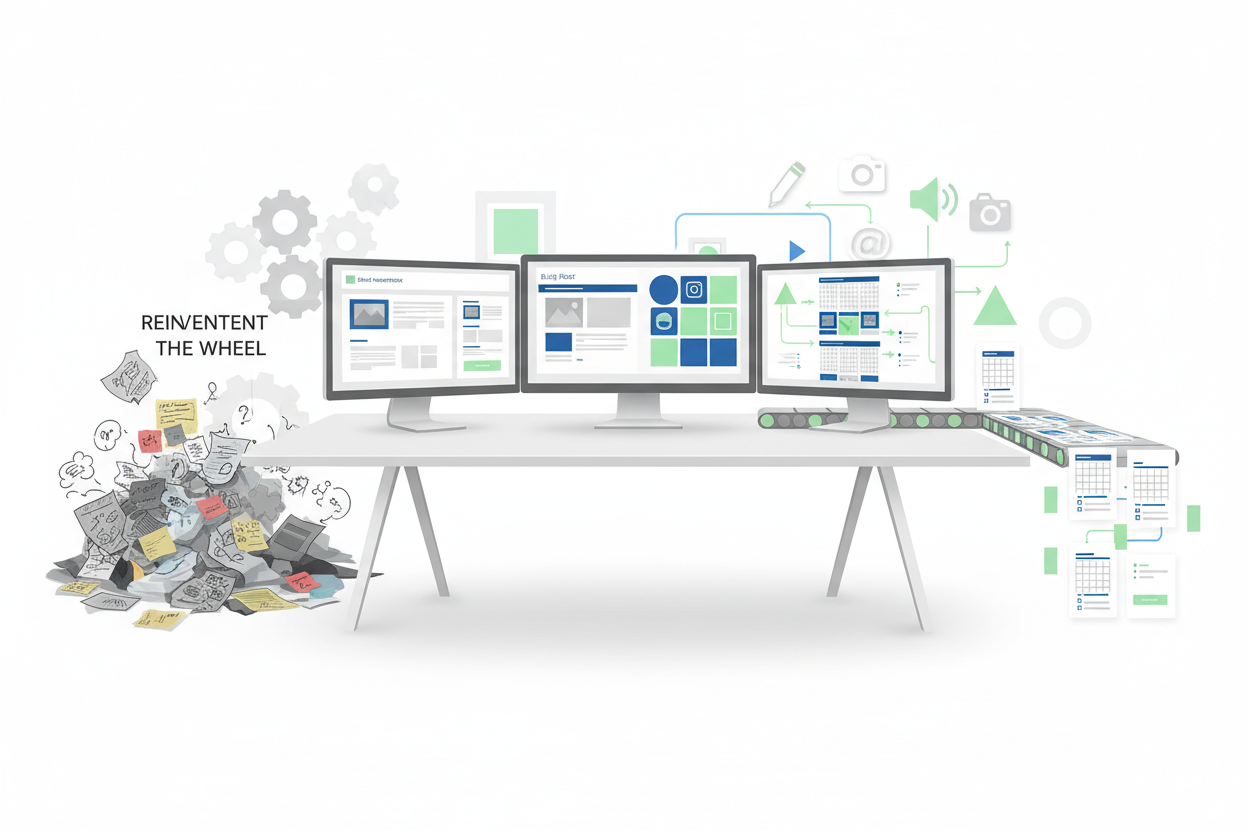
Identifying Your Marketing Workflow Bottlenecks
Every marketing operation has its pain points, and identifying these bottlenecks is crucial for effective system setup. Take a moment to think about where you consistently get stuck. Maybe it’s content creation that takes forever, or perhaps you’re constantly scrambling to respond to leads because you don’t have a proper follow-up system in place.
Common workflow bottlenecks include manual data entry between platforms, inconsistent messaging across channels, lack of clear approval processes for content, and poor communication between team members. These issues might seem minor individually, but they compound quickly and can seriously impact your marketing effectiveness.
Start by documenting your current processes, even if they feel chaotic. Map out how a typical campaign flows from conception to completion, noting every step, tool, and handoff involved. This exercise often reveals inefficiencies that weren’t immediately obvious and provides a clear starting point for optimization.
Essential Tools for Marketing Automation and Integration
The right tools can transform your marketing workflow from a series of disconnected tasks into a smooth, automated machine. However, the key word here is “right” – more tools don’t necessarily mean better results. Focus on platforms that integrate well with each other and align with your specific needs and budget.
Customer Relationship Management (CRM) systems serve as the central hub for most marketing operations. Whether you choose HubSpot, Salesforce, or a simpler solution like Pipedrive, your CRM should seamlessly connect with your email marketing platform, social media management tools, and analytics software.
Marketing automation platforms like Mailchimp, ConvertKit, or ActiveCampaign can handle email sequences, lead scoring, and behavioral triggers without constant manual intervention. These tools become incredibly powerful when properly configured with clear customer journey mapping and segmentation strategies.
Project management tools such as Asana, Monday.com, or Notion help keep campaigns organized and ensure nothing falls through the cracks. The best choice depends on your team size and complexity of projects, but the important thing is choosing one system and sticking with it consistently.
Creating Standardized Content Creation Processes
Content creation often becomes a major bottleneck because it’s typically handled as a series of one-off projects rather than a systematic process. Developing standardized workflows for content creation can dramatically improve both efficiency and quality while reducing the stress associated with constant deadline pressure.
Start by creating content templates and style guides that maintain consistency across all your marketing materials. This includes everything from blog post outlines and social media templates to email formats and video scripts. Having these frameworks in place means team members spend less time reinventing the wheel and more time creating compelling content.
Establish a content calendar that extends beyond just publication dates. Include ideation sessions, research phases, writing deadlines, review periods, and approval checkpoints. This comprehensive approach ensures everyone knows what’s expected and when, reducing last-minute scrambles and improving content quality.
Consider implementing a content approval workflow that clearly defines who needs to review what type of content and in what order. This prevents bottlenecks caused by unclear approval processes and ensures brand consistency across all channels.
Implementing Lead Management and Nurturing Systems
A streamlined lead management system is perhaps one of the most impactful improvements you can make to your marketing workflow. When leads fall through the cracks or receive inconsistent follow-up, you’re essentially throwing money away on the front-end marketing efforts that attracted them in the first place.
Create clear lead scoring criteria that help you prioritize follow-up efforts. Not all leads are created equal, and your system should reflect that reality. Factors like engagement level, company size, budget indicators, and specific actions taken on your website should all contribute to a lead’s score.
Develop automated nurturing sequences that provide value while gently guiding prospects toward a purchasing decision. These sequences should be triggered by specific behaviors or characteristics and should feel personal despite being automated. The goal is to maintain engagement without overwhelming your prospects with irrelevant content.
Establish clear handoff procedures between marketing and sales teams. Define what constitutes a qualified lead, what information should be passed along, and how quickly sales should follow up. This alignment prevents leads from getting lost in the transition and improves conversion rates.
Measuring and Optimizing Your Marketing System Performance
Even the most well-designed marketing system needs regular monitoring and optimization. Set up key performance indicators (KPIs) that align with your business objectives and provide actionable insights into system effectiveness. These might include metrics like lead generation costs, conversion rates, customer lifetime value, and time-to-close ratios.
Create regular reporting schedules that review both individual campaign performance and overall system health. Monthly or quarterly reviews allow you to identify trends, spot emerging issues, and make data-driven decisions about system improvements.
Don’t forget to gather feedback from team members who use the system daily. They often have valuable insights into pain points and improvement opportunities that might not be apparent from the data alone. Regular team check-ins can reveal workflow inefficiencies and inspire creative solutions.
Implement A/B testing protocols for key system components like email subject lines, landing page designs, and call-to-action buttons. Small improvements in conversion rates can have significant cumulative effects on overall system performance.
Scaling Your Marketing Workflow as Your Business Grows
A truly effective marketing system should grow with your business, not constrain it. As your team expands and your marketing efforts become more sophisticated, your workflows need to accommodate increased complexity without losing efficiency.
Plan for scalability by choosing tools and processes that can handle increased volume and additional team members. This might mean investing in more robust platforms early on, even if they seem like overkill for your current needs. The cost of switching systems later often exceeds the initial investment in scalable solutions.
Develop comprehensive documentation and training materials for your marketing systems. As new team members join, they should be able to quickly understand and effectively use your established workflows. This documentation also serves as a valuable reference for troubleshooting and system updates.
Consider implementing role-based access controls and approval hierarchies that can accommodate organizational growth. What works for a three-person team won’t necessarily work for a fifteen-person department, so build flexibility into your systems from the beginning.
Conclusion: Your Path to Marketing Workflow Excellence
Creating an efficient marketing system setup isn’t a one-time project – it’s an ongoing commitment to continuous improvement and optimization. The workflows you establish today should evolve with your business, incorporating new tools, strategies, and team members while maintaining the core principles of efficiency and effectiveness.
Remember that the best marketing system is the one that actually gets used consistently by your team. Don’t let perfectionism prevent you from starting with simple improvements that can provide immediate benefits. You can always refine and enhance your processes as you gain experience and identify new opportunities for optimization.
The investment you make in streamlining your marketing workflows will pay dividends in reduced stress, improved results, and increased capacity for strategic thinking. Start with the areas that cause you the most pain, implement solutions systematically, and watch as your marketing efforts become more predictable, scalable, and successful.
Take action today by identifying your biggest workflow bottleneck and implementing one small improvement. Your future self – and your marketing results – will thank you for it.
No More BS – Get a FREE Consultation
No more BS. Let’s talk real world $#!+ about what you need. You’ll meet with our top dog, and you’ll leave with a better understanding of what you need to do, and how RyCOM might help.