

Small Business Advertising: Effective Budget Allocation Strategies That Actually Work
Running a small business feels like juggling flaming torches while riding a unicycle sometimes, doesn’t it? You’re wearing multiple hats, managing everything from inventory to customer service, and then there’s that ever-present challenge: how to advertise effectively without breaking the bank. The truth is, successful small business advertising isn’t about having the biggest budget – it’s about making smart decisions with the money you have.
Whether you’re working with $500 or $5,000 per month, the principles of effective budget allocation remain the same. You need to know where your customers are, what messages resonate with them, and which channels deliver the best return on investment. Let’s dive into the strategies that will help you maximize every advertising dollar and grow your business sustainably.
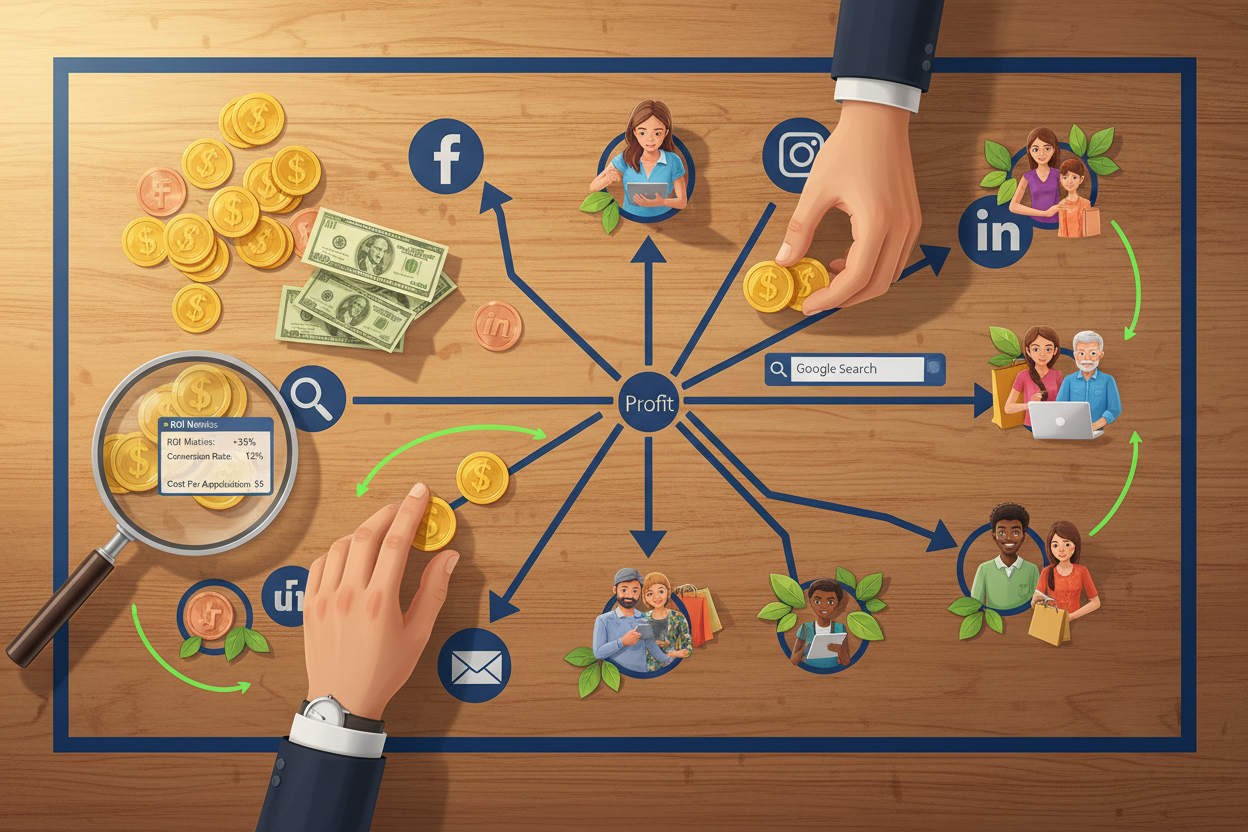
Understanding Your Small Business Advertising Budget Fundamentals
Before you spend a single penny on advertising, you need to establish a realistic budget framework. Most small businesses should allocate between 2-5% of their gross revenue to advertising, though this can vary significantly based on your industry and growth stage. A new restaurant might need to invest 6-8% to build awareness, while an established accounting firm might maintain growth with just 2-3%.
The key is starting with what you can afford to lose. Yes, you read that correctly – afford to lose. While we’re aiming for positive returns, treating your initial advertising budget as an investment in learning will help you make better decisions. You’ll test different channels, messages, and audiences without the pressure of immediate profitability.

Consider your customer lifetime value when setting budgets too. If your average customer spends $1,000 with you over their relationship with your business, you can justify spending more to acquire them than if they only make a single $50 purchase. This perspective helps you think long-term about advertising investments rather than focusing solely on immediate returns.
Digital Marketing Budget Allocation: Where to Invest Your Online Dollars
Digital marketing typically offers the best bang for your buck as a small business owner. The ability to target specific audiences, track results in real-time, and adjust campaigns quickly makes digital channels incredibly attractive. However, the sheer number of options can feel overwhelming.
Start with search engine marketing, particularly Google Ads, if you’re in a service-based business. When someone searches for “plumber near me” or “wedding photographer in Denver,” they have immediate intent to purchase. Capturing these high-intent searches often delivers the fastest returns on your advertising investment.
Social media advertising deserves a significant portion of your digital budget, but choose platforms strategically. Facebook and Instagram work well for businesses targeting consumers, especially if you have visually appealing products or services. LinkedIn proves more effective for B2B companies, while TikTok might be worth exploring if you’re targeting younger demographics.
Don’t overlook email marketing in your digital allocation. While it requires time to build a subscriber list, email consistently delivers some of the highest ROI of any marketing channel. Even dedicating $100-200 monthly to email marketing tools and content creation can yield significant returns over time.
Traditional Advertising Methods: When Old School Still Works
Despite the digital revolution, traditional advertising methods still have their place in smart budget allocation. The key is understanding when and how to use them effectively for your specific business and market.
Local radio advertising can be surprisingly cost-effective, especially for service businesses with geographic limitations. A well-placed radio sponsorship during drive time might cost less than you’d expect and can build consistent brand awareness in your community. The same applies to local print publications – while newspaper circulation has declined, targeted local magazines and community newsletters often have engaged, loyal readerships.
Direct mail deserves consideration too, particularly for businesses serving specific neighborhoods or demographics. A targeted postcard campaign to homes within a five-mile radius of your restaurant or retail store can drive immediate traffic. The key is making your direct mail piece valuable – include a compelling offer, useful information, or both.
Outdoor advertising, including billboards and vehicle wraps, works well for businesses with strong visual branding or simple, memorable messages. A food truck with eye-catching vehicle graphics essentially turns every trip into a mobile advertisement, maximizing the impact of that initial investment.
Cost-Effective Advertising Strategies for Maximum Impact
Smart small business owners know that creativity often trumps budget size. Some of the most effective advertising strategies cost very little but require strategic thinking and consistent execution.
Content marketing represents one of the best long-term investments you can make. Creating valuable blog posts, videos, or podcasts that help your target audience solve problems builds trust and authority over time. While content creation requires time investment, the ongoing traffic and leads it generates can far exceed the returns from paid advertising.
Partnerships and cross-promotions with complementary businesses can stretch your advertising dollars significantly. A wedding photographer partnering with a florist, caterer, and venue can share advertising costs while reaching the same target audience. Each business benefits from the others’ customer relationships and marketing efforts.
Customer referral programs turn your existing clients into your advertising team. Offering incentives for referrals – whether discounts, cash rewards, or exclusive perks – can generate new customers at a fraction of traditional advertising costs. The best part? People trust recommendations from friends and family more than any advertisement.
Leverage user-generated content by encouraging customers to share photos, reviews, or testimonials about your business. This authentic content serves as social proof while providing you with marketing materials at virtually no cost. A simple hashtag campaign or photo contest can generate weeks of marketing content.
Measuring ROI and Optimizing Your Advertising Spend
The difference between successful and struggling small businesses often comes down to measurement and optimization. You can’t improve what you don’t measure, and in advertising, this principle is absolutely critical.
Set up proper tracking from day one. Use Google Analytics to monitor website traffic and conversions, implement phone tracking numbers for different campaigns, and create unique promo codes for various advertising channels. This data tells you which investments are working and which need adjustment or elimination.
Calculate your customer acquisition cost for each advertising channel by dividing total advertising spend by the number of new customers acquired. Compare this to your customer lifetime value to ensure you’re making profitable investments. If it costs $100 to acquire a customer worth $500 over their lifetime, that’s a winning formula.
Review your advertising performance monthly, but avoid making hasty decisions based on short-term fluctuations. Some channels, particularly content marketing and SEO, require months to show their full potential. However, if a channel consistently underperforms after giving it adequate time and budget, don’t be afraid to reallocate those funds to better-performing options.
Test continuously but systematically. Change one variable at a time – whether it’s ad copy, targeting, or budget allocation – so you can identify what’s driving improvements or declines in performance. Small, consistent optimizations compound over time into significant improvements in your advertising effectiveness.
Common Budget Allocation Mistakes to Avoid
Learning from others’ mistakes can save you both time and money. One of the most common errors small business owners make is spreading their budget too thin across too many channels. It’s better to dominate one or two advertising channels than to have a weak presence across five or six.
Another frequent mistake is abandoning channels too quickly. Digital advertising platforms need time to optimize and learn from your campaigns. Shutting down a Facebook ad campaign after just a few days rarely gives it enough time to find your ideal audience and optimize for conversions.
Don’t ignore the importance of creative quality in favor of budget size. A compelling, well-designed advertisement with a smaller budget will often outperform a poorly crafted ad with twice the spending behind it. Invest in quality copywriting, photography, or design – these elements significantly impact your advertising effectiveness.
Failing to account for seasonal fluctuations in your budget planning can leave you scrambling during peak periods or overspending during slow seasons. Analyze your business patterns and adjust advertising spend accordingly, increasing investment before busy periods and scaling back during predictably slow times.
Building Your Long-Term Advertising Success Plan
Effective small business advertising isn’t a sprint – it’s a marathon that requires consistent effort, continuous learning, and strategic patience. Start by establishing your foundation: clear target audience definitions, compelling value propositions, and reliable tracking systems.
Develop a diversified advertising portfolio over time. While you might start with just Google Ads or Facebook advertising, gradually expand into complementary channels as your budget and expertise grow. This diversification protects your business from algorithm changes or platform issues that could impact any single channel.
Invest in building owned media assets alongside your paid advertising efforts. Your email list, social media following, and website traffic represent assets you control, unlike paid advertising where you’re essentially renting attention. Balance immediate advertising needs with long-term asset building for sustainable growth.
Remember that your advertising strategy should evolve as your business grows. What works for a startup with $1,000 monthly advertising budget will need adjustment as you scale to $10,000 or $50,000 in monthly advertising spend. Stay flexible and willing to adapt your approach as circumstances change.
Successful small business advertising comes down to making smart decisions with limited resources, measuring everything you can, and continuously optimizing based on real performance data. Start with a realistic budget, focus on channels where your customers spend time, and never stop testing and improving your approach. With patience and persistence, even modest advertising budgets can drive significant business growth and long-term success.
No More BS – Get a FREE Consultation
No more BS. Let’s talk real world $#!+ about what you need. You’ll meet with our top dog, and you’ll leave with a better understanding of what you need to do, and how RyCOM might help.