

Small Business Marketing: Leveraging Community Engagement for Sustainable Growth
In today’s hyper-connected digital world, small businesses often feel pressured to compete with corporate giants on their terms. But here’s the thing – you don’t need a million-dollar marketing budget to build a thriving business. What you need is something much more valuable and authentic: genuine community engagement.
Community engagement isn’t just about posting on social media or sponsoring the local little league team (though those can be part of it). It’s about weaving your business into the fabric of your local community, becoming an integral part of people’s daily lives, and building relationships that transcend simple buyer-seller transactions.
When I started my first small business fifteen years ago, I made every marketing mistake in the book. I threw money at Facebook ads, created flashy flyers, and even tried cold calling. Nothing worked until I started showing up – really showing up – in my community. That’s when everything changed.
Understanding Community-Centered Marketing
Community-centered marketing is fundamentally different from traditional advertising approaches. Instead of interrupting people with your message, you become part of their world. You solve problems, celebrate successes, and contribute to the collective well-being of your neighborhood or industry community.
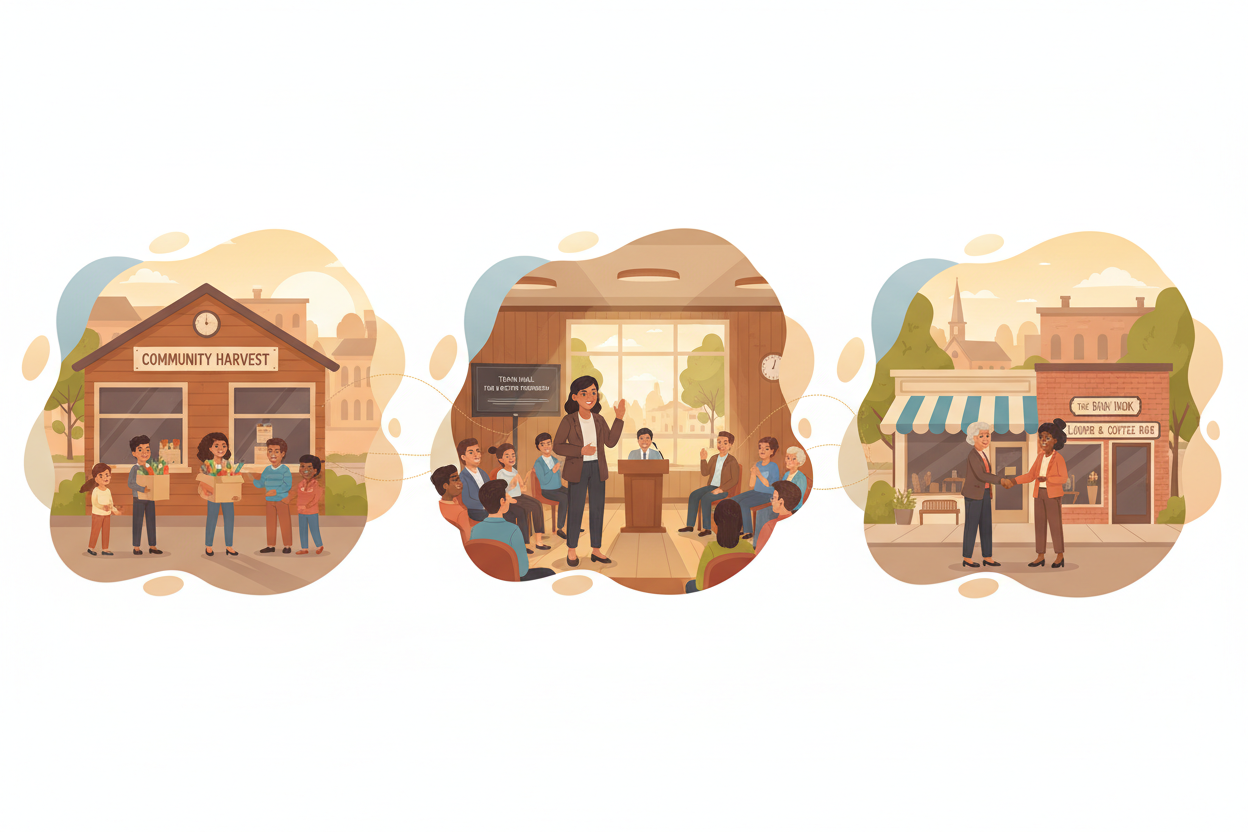
This approach works because trust is the foundation of all business relationships, and trust is built through consistent, authentic interactions over time. When your neighbors see you volunteering at the food bank, participating in town hall meetings, or helping other local businesses succeed, they begin to view you not just as a service provider, but as a community member who happens to run a business.

The beauty of community engagement lies in its authenticity. People can spot fake community involvement from miles away, but they’re drawn to businesses that genuinely care about making their corner of the world a little better. This emotional connection translates into customer loyalty that’s nearly impossible to break.
Building Authentic Local Partnerships
One of the most effective ways to engage with your community is through strategic partnerships with other local businesses and organizations. These partnerships should feel natural and mutually beneficial, not forced or purely transactional.
Start by identifying businesses that serve your same customer base but aren’t direct competitors. A wedding photographer might partner with local florists, caterers, and venues. A fitness trainer could collaborate with nutritionists, sports equipment stores, and wellness centers. The key is finding partners whose values align with yours and whose services complement what you offer.
But don’t stop at businesses. Consider partnering with local schools, churches, community centers, and nonprofit organizations. These partnerships often provide the most meaningful opportunities to demonstrate your commitment to the community while reaching potential customers in a natural, non-salesy environment.
I’ve seen incredible results from businesses that host joint events, create referral programs, or simply cross-promote each other’s services. One local bakery I know partners with a nearby coffee shop to provide pastries, while the coffee shop recommends the bakery for custom cakes. Both businesses benefit from increased foot traffic and expanded customer bases.
Creating Value Through Local Events and Sponsorships
Events are where communities come alive, and they present golden opportunities for small businesses to showcase their personality and values. But here’s the crucial part – your participation should add genuine value to the event, not just promote your business.
Consider hosting educational workshops related to your expertise. A financial advisor might offer free budgeting seminars, while a gardening center could teach composting techniques. These events position you as an expert while providing real value to community members.
When it comes to sponsorships, think beyond just slapping your logo on a banner. Get involved in the planning process, volunteer your time, or contribute services in addition to financial support. The local hardware store that provides tools and expertise for community garden projects will be remembered long after the event ends.
Seasonal events offer particularly rich opportunities. Holiday festivals, farmers markets, charity runs, and school fundraisers all provide natural venues for community engagement. The key is choosing events that align with your brand values and where your target customers are likely to participate.
Leveraging Social Media for Community Connection
Social media becomes infinitely more powerful when it’s used to strengthen real-world community connections rather than replace them. Your online presence should reflect and amplify your offline community involvement.
Share stories about other local businesses, highlight community achievements, and showcase local events – even ones you’re not directly involved in. This approach positions your business as a community connector and information hub, making your social media accounts valuable resources for local residents.
Use location-based hashtags and engage with posts from other local businesses and community organizations. When you comment meaningfully on other businesses’ posts or share their content, you’re building the kind of reciprocal relationships that strengthen the entire local business ecosystem.
Consider creating content that showcases your local area. Behind-the-scenes posts about your business operations, employee spotlights, and customer success stories all help humanize your brand and create emotional connections with your audience.
Supporting Local Causes and Nonprofit Organizations
Aligning your business with causes that matter to your community is one of the most powerful ways to demonstrate your values while making a positive impact. But this support needs to be genuine and consistent, not just a one-time publicity stunt.
Choose causes that resonate with your personal values and business mission. If you’re passionate about environmental sustainability, support local conservation efforts or sponsor recycling programs. If education matters to you, consider partnering with schools or literacy programs.
Your support doesn’t always have to be financial. Donating your time, skills, or services can be equally valuable and often more meaningful. A marketing consultant might offer pro bono services to local nonprofits, while a restaurant could provide meals for volunteer appreciation events.
The key is making this support visible to your community without being boastful about it. Share your involvement naturally through your regular communications, and let others tell your story whenever possible. Word-of-mouth recommendations from nonprofit leaders and volunteers carry tremendous weight in small communities.
Measuring the Impact of Community Engagement
While community engagement benefits aren’t always immediately quantifiable, there are ways to measure the impact of your efforts. Track metrics like customer retention rates, referral sources, and local brand recognition through surveys or informal feedback.
Pay attention to the quality of customer interactions. Are people mentioning they’ve seen you at community events? Are they referring friends and family? Are other businesses reaching out for collaboration opportunities? These qualitative indicators often matter more than traditional marketing metrics.
Monitor your online reputation and local search rankings. Businesses with strong community ties often see improvements in online reviews and local SEO performance as satisfied customers naturally share their positive experiences.
Consider conducting annual community surveys to gauge brand awareness and perception. This feedback can help you refine your community engagement strategy and identify new opportunities for involvement.
Common Pitfalls and How to Avoid Them
The biggest mistake businesses make with community engagement is treating it as a short-term marketing tactic rather than a long-term commitment. Authentic community involvement takes time to develop and requires consistent effort even when immediate results aren’t visible.
Another common pitfall is being too sales-focused in community interactions. People can sense when your primary motivation is generating leads rather than genuinely contributing to the community. Focus on building relationships and providing value, and the business benefits will follow naturally.
Don’t spread yourself too thin by trying to participate in every community event or cause. It’s better to be deeply involved in a few initiatives that truly matter to you than to have superficial involvement in many.
Finally, avoid making community engagement solely about your business owner’s personal interests. While passion is important, make sure your chosen activities resonate with your target customers and align with your business values.
Building Long-Term Community Relationships
The most successful small businesses understand that community engagement is a marathon, not a sprint. Building meaningful relationships takes time, consistency, and genuine care for the people and causes you support.
Start small and build gradually. Choose one or two community involvement opportunities that genuinely excite you and commit to them fully. As you establish yourself and build relationships, you can expand your involvement naturally.
Remember that community engagement is ultimately about people. Take time to learn names, remember personal details, and follow up on conversations. These small gestures create the foundation for lasting business relationships.
Stay authentic to your brand and values throughout your community involvement. People appreciate consistency, and trying to be something you’re not will eventually backfire. Your genuine personality and values are your greatest assets in building community connections.
Community engagement isn’t just a marketing strategy – it’s a way of doing business that benefits everyone involved. When you invest in your community, you’re not just building a customer base; you’re creating a support network that will sustain your business through good times and challenging periods alike. In our increasingly digital world, this human connection becomes more valuable every day.
The small businesses that thrive in the coming years will be those that understand this fundamental truth: success isn’t just about what you sell, but about how deeply you’re woven into the fabric of your community. Start today, start small, but most importantly, start with genuine intention to make your corner of the world a little bit better.
No More BS – Get a FREE Consultation
No more BS. Let’s talk real world $#!+ about what you need. You’ll meet with our top dog, and you’ll leave with a better understanding of what you need to do, and how RyCOM might help.