

Ecommerce Website Design: Enhancing User Experience for Maximum Conversions
In today’s competitive digital marketplace, your ecommerce website design can make or break your business. I’ve seen countless online stores lose potential customers within seconds simply because their user experience wasn’t up to par. The truth is, consumers have become incredibly discerning about where they spend their money online, and they’ll abandon a poorly designed website faster than you can say “checkout.”
When we talk about ecommerce user experience, we’re discussing much more than just pretty visuals. It’s about creating a seamless journey that guides visitors from their first click to final purchase, and hopefully, turns them into loyal customers. A well-designed ecommerce site doesn’t just look good – it works intuitively, loads quickly, and anticipates user needs at every step.
The statistics speak volumes about the importance of user experience in ecommerce. Research shows that 88% of online consumers are less likely to return to a site after a bad experience, while a one-second delay in page response can result in a 7% reduction in conversions. These numbers aren’t just data points – they represent real revenue impact for your business.
The Foundation of Exceptional Ecommerce UX Design
Building an outstanding ecommerce user experience starts with understanding your customers’ mindset when they visit your site. They’re not just browsing aimlessly – they have specific goals, whether it’s finding a particular product, comparing prices, or making a quick purchase they’ve been thinking about for weeks.
Your website design should reflect this purpose-driven behavior. Every element, from your navigation menu to your product images, should serve a specific function in guiding users toward their goals. I’ve found that the most successful ecommerce sites are those that eliminate friction at every possible touchpoint.
Think about your own online shopping experiences. What made you complete a purchase on one site versus abandoning your cart on another? Chances are, it came down to how easy and trustworthy the entire process felt. This is the foundation you need to build upon when designing your ecommerce platform.
Mobile-First Design: Meeting Users Where They Are
Mobile commerce now accounts for over half of all ecommerce traffic, and this trend shows no signs of slowing down. Your ecommerce website design must prioritize mobile users, not treat them as an afterthought. This means designing for smaller screens first, then scaling up to desktop versions.
Mobile-first design goes beyond responsive layouts. It requires rethinking how users interact with your site using touch gestures, considering thumb-friendly navigation zones, and optimizing for slower mobile internet connections. Your product images need to be crisp even on small screens, your checkout process should work seamlessly with mobile payment options, and your search functionality must be easily accessible with minimal typing.
I’ve noticed that successful mobile ecommerce designs often use larger buttons, simplified navigation menus, and streamlined product pages that focus on essential information. The goal is to reduce cognitive load while maintaining all the functionality users need to make informed purchasing decisions.
Navigation That Actually Makes Sense
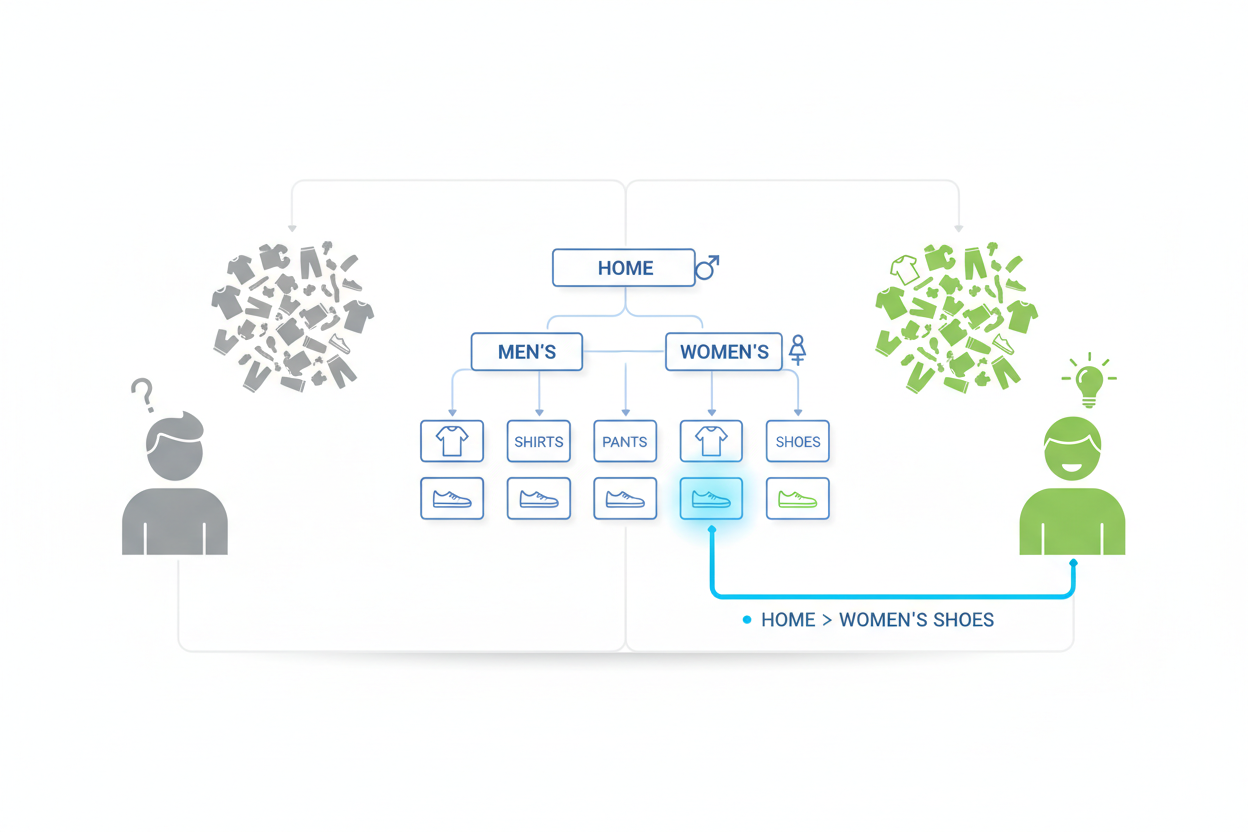
Your website navigation is like a roadmap for your customers. If they can’t find what they’re looking for within a few clicks, they’ll likely head to a competitor’s site instead. Effective ecommerce navigation design balances comprehensive product categorization with simplicity and clarity.
The best ecommerce sites use intuitive category structures that match how customers think about products. For example, a clothing retailer might organize by gender first, then by product type, rather than by brand or price point. Your main navigation should be visible on every page, and breadcrumb navigation helps users understand exactly where they are in your site hierarchy.
Search functionality deserves special attention in ecommerce design. Your search bar should be prominently placed, offer autocomplete suggestions, and handle common misspellings gracefully. Advanced filtering options help users narrow down large product catalogs quickly, while recently viewed items and personalized recommendations can guide users to relevant products they might have missed.
Product Pages That Convert Browsers into Buyers
Your product pages are where the magic happens – or where potential sales die. These pages need to provide comprehensive information while maintaining visual appeal and fast loading times. High-quality product images from multiple angles, zoom functionality, and even 360-degree views can help replicate the in-store experience of examining products closely.
Product descriptions should address common customer questions and concerns before they arise. Include detailed specifications, size guides, care instructions, and compatibility information where relevant. Customer reviews and ratings add social proof and help address hesitations that might prevent purchases.
The add-to-cart process should be straightforward and prominent. Use clear, action-oriented button text like “Add to Cart” or “Buy Now” rather than generic terms. Consider offering multiple purchase options, such as one-click buying for returning customers or “buy now, pay later” services that are increasingly popular with younger consumers.
Streamlining the Checkout Process for Maximum Conversions
Cart abandonment rates hover around 70% across all industries, and a complicated checkout process is often the culprit. Your checkout design should minimize the number of steps required while collecting all necessary information efficiently. Consider implementing a guest checkout option alongside account creation to reduce barriers for first-time customers.
Progress indicators help users understand how many steps remain in the checkout process, reducing anxiety about time commitment. Clear error messages and real-time validation help users correct mistakes immediately rather than discovering issues after clicking submit.
Payment security is paramount in ecommerce design. Display security badges prominently, use SSL certificates, and offer multiple payment options including digital wallets like Apple Pay and Google Pay. The more payment methods you accept, the more likely you are to accommodate your customers’ preferences.
Building Trust Through Design Elements
Trust is the invisible currency of ecommerce success. Your website design plays a crucial role in establishing credibility with potential customers who can’t physically examine your products or interact with your staff face-to-face. Professional design aesthetics, consistent branding, and error-free functionality all contribute to perceived trustworthiness.
Customer testimonials, review systems, and case studies provide social proof that others have had positive experiences with your business. Display these prominently throughout your site, particularly on product pages and near checkout areas where purchase decisions are being made.
Clear contact information, including phone numbers, physical addresses, and multiple contact methods, helps establish legitimacy. A comprehensive FAQ section and visible return policy demonstrate transparency and customer service commitment. Security badges, industry certifications, and partnership logos can further enhance credibility.
Performance Optimization: Speed as a Competitive Advantage
Page loading speed directly impacts both user experience and search engine rankings. Studies show that 40% of users abandon websites that take more than three seconds to load. In ecommerce, every second of delay can result in measurable revenue loss.
Image optimization is crucial for ecommerce sites with extensive product catalogs. Use appropriate file formats, compress images without sacrificing quality, and implement lazy loading for product galleries. Content delivery networks can help serve images and other assets from servers closer to your users’ geographic locations.
Minimize the use of heavy plugins or widgets that don’t directly contribute to the user experience or conversion process. Regular performance audits can help identify bottlenecks and opportunities for improvement. Tools like Google PageSpeed Insights provide specific recommendations for optimizing your site’s performance.
Personalization: Creating Unique Shopping Experiences
Modern ecommerce platforms offer sophisticated personalization capabilities that can significantly enhance user experience. Personalized product recommendations based on browsing history, purchase patterns, and similar customer behavior can help users discover relevant products they might otherwise miss.
Dynamic content that changes based on user location, previous visits, or demographic information creates more relevant experiences. For example, showing weather-appropriate clothing recommendations or highlighting products available for same-day delivery in the user’s area.
Email integration with your ecommerce design allows for personalized follow-up communications, abandoned cart recovery emails, and targeted promotional campaigns based on user behavior and preferences.
Future-Proofing Your Ecommerce Design
The ecommerce landscape continues evolving rapidly, with new technologies and user expectations emerging regularly. Voice commerce, augmented reality product visualization, and artificial intelligence-powered customer service are becoming increasingly mainstream.
Your ecommerce design should be flexible enough to accommodate new features and technologies without requiring complete overhauls. Modular design approaches and robust content management systems provide the foundation for ongoing improvements and adaptations.
Regular user testing and analytics review help identify areas for improvement and ensure your design continues meeting evolving customer needs. A/B testing different design elements can provide data-driven insights into what works best for your specific audience.
Measuring Success: Analytics and Continuous Improvement
Effective ecommerce design is an ongoing process, not a one-time project. Key performance indicators like conversion rates, average order value, time on site, and cart abandonment rates provide insights into how well your design is serving your business goals.
User behavior analytics can reveal pain points in your customer journey that might not be obvious from surface-level metrics. Heat mapping tools show where users click, scroll, and spend time on your pages, while session recordings can reveal specific usability issues.
Customer feedback through surveys, reviews, and direct communication provides qualitative insights that complement your quantitative data. This combination of hard metrics and user sentiment helps guide design decisions that truly improve the user experience.
Creating an exceptional ecommerce user experience requires balancing aesthetic appeal with functional efficiency, technological capability with human psychology, and business goals with customer needs. The most successful online stores are those that view design as an investment in customer relationships rather than just a visual exercise.
Remember that great ecommerce design is ultimately about removing obstacles between your customers and their goals. Whether someone is looking for a specific product, comparing options, or ready to make a purchase, your website should make their journey as smooth and satisfying as possible. When you achieve this balance, you’ll not only see improved conversion rates and customer satisfaction but also build the foundation for long-term business growth in the competitive world of ecommerce.
No More BS – Get a FREE Consultation
No more BS. Let’s talk real world $#!+ about what you need. You’ll meet with our top dog, and you’ll leave with a better understanding of what you need to do, and how RyCOM might help.