

Startup Marketing Plan: Building a Roadmap for Growth
Picture this: you’ve got an incredible product, a passionate team, and the drive to change the world. But there’s one problem – nobody knows you exist. This scenario plays out for countless startups every day. The difference between those that thrive and those that struggle often comes down to one crucial element: a well-crafted marketing plan.
Creating a startup marketing plan isn’t just about throwing ideas at the wall and seeing what sticks. It’s about building a strategic roadmap that guides your growth from day one to market dominance. Whether you’re bootstrapping in your garage or have secured your first round of funding, having a clear marketing strategy can make the difference between burning through cash and building sustainable growth.
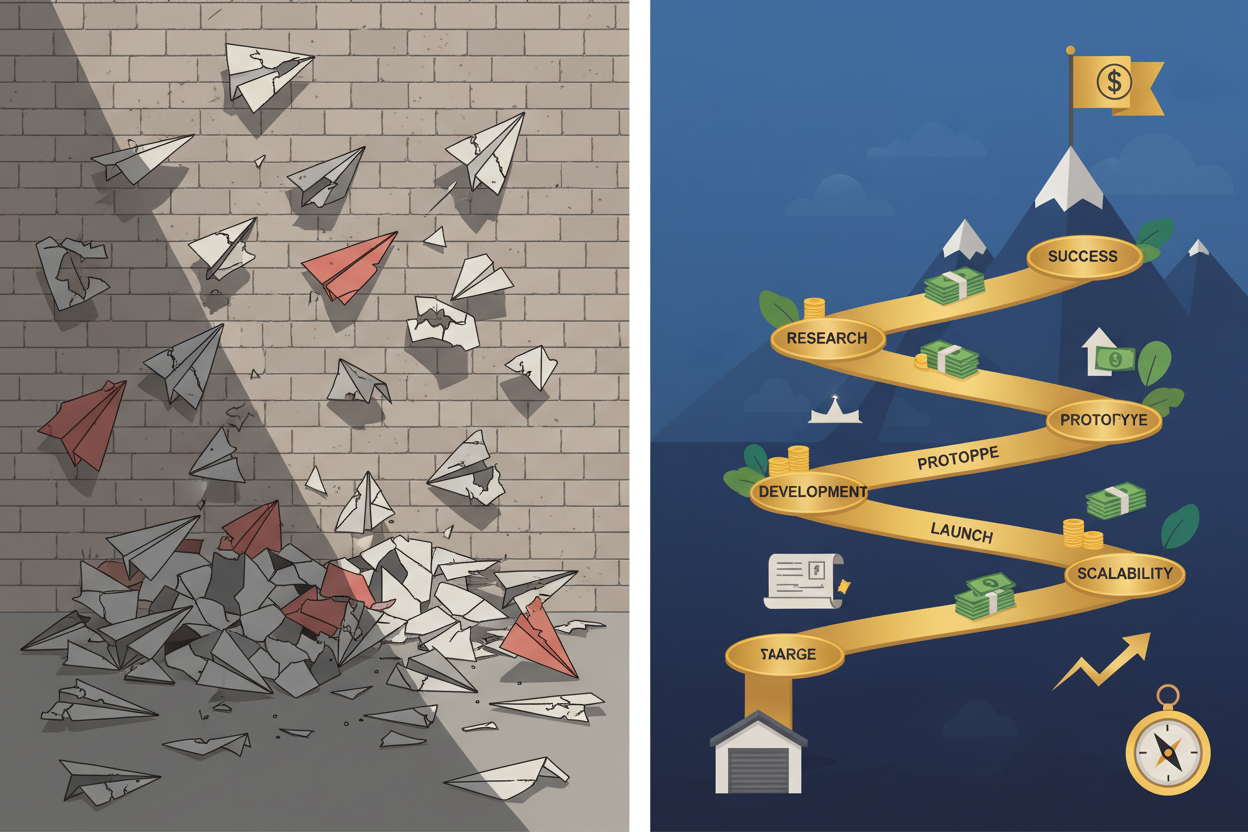
In this comprehensive guide, we’ll walk through everything you need to know about creating a marketing plan that actually works for startups. From understanding your audience to measuring success, we’ll cover the essential components that will help you navigate the challenging but exciting journey of startup marketing.
Understanding Your Target Market: The Foundation of Success
Before you write a single piece of content or spend a dollar on advertising, you need to know exactly who you’re talking to. This might sound obvious, but you’d be surprised how many startups skip this crucial step and wonder why their marketing efforts fall flat.
Start by creating detailed buyer personas that go beyond basic demographics. Yes, knowing that your target customer is a 35-year-old marketing manager is helpful, but what keeps them up at night? What tools do they use? Where do they get their information? What challenges are they facing that your product can solve?
Conduct customer interviews, surveys, and market research to gather this information. Talk to potential customers, even if they’re not ready to buy yet. These conversations will provide invaluable insights that will shape every aspect of your marketing strategy. Remember, assumptions can be dangerous in startup marketing – data-driven decisions are your best friend.
Don’t forget to analyze your competition during this phase. Who else is trying to solve similar problems? How are they positioning themselves? What gaps exist in their approach that you can exploit? Competitive analysis isn’t about copying what others are doing; it’s about finding your unique angle in the market.
Setting Clear Marketing Objectives and Goals
Once you understand your market, it’s time to set clear, measurable objectives. Vague goals like “increase brand awareness” won’t cut it in the startup world where every dollar and every hour counts. You need specific, time-bound objectives that align with your overall business goals.
Consider using the SMART framework: Specific, Measurable, Achievable, Relevant, and Time-bound. Instead of “increase website traffic,” aim for “increase organic website traffic by 150% within six months through content marketing and SEO optimization.” This gives you a clear target to work toward and makes it easier to track progress.
Your marketing objectives should ladder up to broader business objectives. If your goal is to acquire 1,000 new customers in the next quarter, work backward to determine how many leads you need, what conversion rates you’re targeting, and how much traffic you need to generate. This reverse engineering approach helps ensure your marketing efforts directly contribute to business growth.
It’s also important to set both short-term and long-term objectives. While you need quick wins to maintain momentum and prove value, building a sustainable marketing engine takes time. Balance immediate needs with long-term brand building and market positioning efforts.
Budget Allocation: Maximizing Impact with Limited Resources
Let’s be honest – most startups don’t have unlimited marketing budgets. In fact, many are working with shoestring budgets that require creative thinking and strategic prioritization. The key is to allocate your limited resources where they’ll have the maximum impact.
Start by determining your overall marketing budget. A common rule of thumb is to allocate 7-12% of revenue to marketing, but for early-stage startups, this might not be realistic or appropriate. Instead, consider your growth stage, funding situation, and business model when setting your budget.
Once you have a total budget, divide it across different channels and activities. Don’t put all your eggs in one basket, but also don’t spread yourself too thin. It’s better to excel at a few channels than to be mediocre at many. Consider the 80/20 rule: focus 80% of your budget on proven channels and tactics, and use 20% to experiment with new opportunities.
Remember that budget allocation isn’t just about money – it’s also about time and human resources. If you’re a solo founder wearing multiple hats, your time is your most valuable resource. Prioritize activities that you can execute well with your current team and resources, and consider outsourcing or hiring for areas where you lack expertise.
Channel Selection: Finding Your Marketing Mix
With countless marketing channels available, choosing the right mix can feel overwhelming. The secret is to focus on channels where your target audience actually spends time and where you can realistically compete.
Content marketing is often a great starting point for startups because it’s cost-effective and builds long-term value. Creating valuable, educational content helps establish thought leadership while improving search engine visibility. Blog posts, whitepapers, webinars, and podcasts can all be powerful tools for attracting and nurturing potential customers.
Social media marketing can be incredibly effective, but only if you choose the right platforms. B2B startups might find more success on LinkedIn and Twitter, while consumer brands might thrive on Instagram or TikTok. Don’t feel pressured to be everywhere – it’s better to have a strong presence on one or two platforms than a weak presence across many.
Email marketing remains one of the highest ROI channels for startups. Building an email list from day one allows you to maintain direct communication with prospects and customers. Use lead magnets, newsletter signups, and gated content to grow your list, then nurture subscribers with valuable, relevant content.
Paid advertising can accelerate growth, but it requires careful management and optimization. Start small with platforms like Google Ads or Facebook Ads, test different approaches, and scale what works. Remember that paid advertising is often most effective when combined with strong organic efforts.
Content Strategy: Creating Value-Driven Marketing
Content is the fuel that powers most successful startup marketing engines. But creating content just for the sake of it won’t move the needle. Your content strategy should be laser-focused on providing value to your target audience while advancing your business objectives.
Start by mapping content to different stages of the customer journey. Awareness-stage content might include educational blog posts and industry insights that help potential customers understand their problems. Consideration-stage content could include comparison guides, case studies, and product demonstrations. Decision-stage content might feature free trials, consultations, and detailed product information.
Consistency is crucial in content marketing. It’s better to publish one high-quality blog post per week than to publish daily for a month and then go silent for three months. Create an editorial calendar that you can realistically maintain, and stick to it. Your audience will come to expect and appreciate regular, valuable content from your brand.
Don’t forget about repurposing content across different formats and channels. A single piece of research can become a blog post, an infographic, a podcast episode, and several social media posts. This approach maximizes the value of your content creation efforts while reaching different audience preferences.
User-generated content can be particularly powerful for startups. Customer testimonials, case studies, and reviews provide social proof that can be more convincing than any marketing message you create. Encourage satisfied customers to share their experiences and make it easy for them to do so.
Measuring Success: Key Performance Indicators for Startups
What gets measured gets managed, and this is especially true for startup marketing. Without proper measurement and analytics, you’re essentially flying blind, making it impossible to optimize your efforts or prove ROI to stakeholders.
Choose KPIs that directly relate to your business objectives. If your goal is customer acquisition, track metrics like cost per acquisition, conversion rates, and lifetime value. If brand awareness is a priority, monitor metrics like website traffic, social media reach, and brand mention sentiment.
Implement proper tracking from the beginning. Set up Google Analytics, social media analytics, and email marketing metrics. Use UTM parameters to track the performance of different campaigns and channels. The data you collect in your early days will be invaluable for optimizing your marketing efforts as you scale.
Create regular reporting rhythms to review your performance. Weekly reviews help you catch issues quickly and make tactical adjustments. Monthly reviews allow for deeper analysis and strategic pivots. Quarterly reviews should focus on overall strategy assessment and planning for the next period.
Don’t just collect data – act on it. If a particular channel isn’t performing, investigate why and either optimize or reallocate resources. If something is working well, double down and see if you can scale it. The ability to quickly adapt based on data is one of the key advantages startups have over larger, slower-moving competitors.
Adapting and Scaling Your Marketing Efforts
The startup world moves fast, and your marketing plan needs to be flexible enough to evolve with changing circumstances. What works in your first six months might not work in your second year, and that’s perfectly normal.
Build flexibility into your planning process. While it’s important to have a clear strategy, be prepared to pivot when data suggests a different approach might be more effective. This might mean shifting budget between channels, adjusting your messaging, or even targeting a different audience segment.
As your startup grows, your marketing needs will evolve. Early-stage marketing might focus heavily on product-market fit and customer validation. Growth-stage marketing typically emphasizes scaling successful channels and expanding market reach. Each stage requires different tactics and metrics.
Don’t be afraid to experiment with new channels and tactics as you scale. What seemed impossible with a team of two might become feasible with a team of ten. Similarly, channels that were too expensive in your early days might become cost-effective as your customer lifetime value increases.
Consider building marketing automation and systems early, even if they seem like overkill at first. Tools for email marketing, social media scheduling, and lead nurturing can save enormous amounts of time as you scale. The key is to choose tools that can grow with you rather than ones you’ll quickly outgrow.
Building Your Marketing Roadmap for Sustainable Growth
Creating a successful startup marketing plan isn’t about finding a magic bullet or copying what worked for another company. It’s about understanding your unique situation, setting clear objectives, and building a systematic approach to reaching your target audience.
Remember that marketing is a marathon, not a sprint. While startups often need to show quick results, building a sustainable marketing engine takes time and patience. Focus on creating genuine value for your audience, measuring what matters, and continuously optimizing your approach based on real data.
The most successful startup marketing plans are those that evolve with the business while maintaining focus on core objectives. Stay flexible, stay customer-focused, and don’t be afraid to take calculated risks. Your marketing plan should be a living document that guides your growth journey, not a static strategy that sits on a shelf.
As you implement your marketing plan, remember that consistency and persistence often matter more than perfection. Start with what you can execute well, measure your results, and gradually expand your efforts as you learn what works for your specific business and market. With the right approach and commitment to continuous improvement, your startup marketing plan will become the roadmap that guides you from startup to scale-up success.
No More BS – Get a FREE Consultation
No more BS. Let’s talk real world $#!+ about what you need. You’ll meet with our top dog, and you’ll leave with a better understanding of what you need to do, and how RyCOM might help.